Tag: agile
Yazılımcılar Neden Kariyer Yolunu Proje Yöneticiliğine Doğru Çevirmeli?

Teknoloji dünyası hızla değişiyor. Yapay zekânın yükselişinden çevik (agile) yöntemlerin baskın hale gelmesine kadar, yazılım geliştirme ekiplerindeki roller giderek daha dinamik bir hal alıyor. Bu ortamda yazılımcılar için en stratejik geçişlerden biri, kodlamadan proje yönetimine yönelmek olabilir. İlk bakışta teknik dünyadan uzaklaşmak gibi görünse de, bu geçiş hem doğal hem tatmin edici hem de etkili bir kariyer adımıdır.
1. Büyük Resmi Görme Yeteneği
Bir yazılımcı olarak genellikle belirli problemleri çözmeye veya özellikler geliştirmeye odaklanırsınız. Ancak bir proje yöneticisi (PM) olduğunuzda, tüm bu görevlerin nasıl bir stratejiye hizmet ettiğini görmeye başlarsınız. Kodlamadan gelen biri olarak, teknolojik sınırları, yazılım geliştirme sürecinin hızını ve mantığını bildiğiniz için planlamada ve takımla iletişimde büyük avantaj sağlarsınız.
2. Teknik ve İş Dünyası Arasında Köprü Olmak
Birçok proje, teknoloji başarısız olduğu için değil, iş gereksinimleri doğru anlaşılmadığı için başarısız olur. Kodlamadan gelen bir Proje Yöneticisi, teknik ve teknik olmayan dünyalar arasında mükemmel bir çevirmen olur. Hem iş birimlerini hem geliştiricileri anlayarak gereksiz karmaşayı önler, netlik sağlar ve gerçekten ihtiyaç duyulan ürünlerin ortaya çıkmasına katkı sunar.
3. Kariyer Gelişimi ve Etki Alanının Artması
Bir yazılımcı olarak derinleşmediğiniz sürece kariyeriniz bir noktada tıkanabilir. Ancak proje yöneticileri için kariyer yolu genellikle daha açık ve yukarı doğrudur: Program Yöneticisi, Ürün Sahibi, Mühendislik Direktörü hatta CTO gibi roller. Çünkü bu pozisyonlar, sadece teknik değil, aynı zamanda zamanlama, insan yönetimi ve iş sonuçları gibi konularda da yetkinlik gerektirir.
4. Teknolojiden Anlayan PM’lere Artan Talep
Şirketler, kodlama bilen proje yöneticilerinin ne kadar değerli olduğunu artık daha iyi anlıyor. Bu kişiler hem geliştiricilerle anlamlı teknik tartışmalar yapabilir, hem de sorunları daha çıkmadan fark edip çözüme kavuşturabilir. Kodlama yeteneğinizi tamamen bırakmanız gerekmez – hala kodları okuyabilir, mimari kararlar alabilir ve teknik hedeflerle iş hedeflerini buluşturabilirsiniz.
5. Zor Bilgilerle Yumuşak Becerileri Birleştirme
Yazılımcılar olarak zaten analitik düşünceye, detaylara dikkat etmeye ve sorun çözmeye alışıksınız. Proje yönetimi ise bu becerilerin üstüne iletişim, müzakere, liderlik, risk yönetimi ve paydaşlarla ilişki kurma gibi soft-skill’leri (yumuşak beceriler) eklemenizi sağlar. Bu yetkinlikler, ister teknik ister yönetici olsun, tüm üst düzey rollerde hayati öneme sahiptir.
6. Hâlâ Sorun Çözüyor Olacaksınız – Sadece Daha Geniş Ölçekte
Proje yöneticileri sadece takvimleri yönetmez. Sorunları önceden fark eder, öncelikleri dengeler, krizleri önler. Kod yazmanın zevkinden uzaklaşmak istemeyen yazılımcılar için Proje Yöneticiliği hâlâ problem çözme işidir – ama bu kez takımların ve süreçlerin karşılaştığı sorunları çözersiniz.
7. Teknikten Uzaklaşmak Zorunda Değilsiniz (İsterseniz)
Özellikle çevik yapılarda, birçok proje yöneticisi hâlâ teknik süreçlerin içinde yer alır. Teknik Proje Yöneticisi ya da Mühendislik Yöneticisi gibi pozisyonlar, teknik kararlarla iç içe kalmanıza olanak tanır. Yani “koddan uzak kalacağım” endişesi taşımadan hibrit bir rol üstlenebilirsiniz.
8. Farklı Rollerle Empati Kurmayı Öğrenirsiniz
Proje yöneticisi olduğunuzda sadece yazılımı değil, tasarımcıları, testçileri, pazarlama ekibini, hukuk ve uyum süreçlerini de tanımaya başlarsınız. Bu rollerin ne kadar karmaşık ve kritik olduğunu anlayarak, daha güçlü bir iletişim kurar ve daha sağlıklı ekip çalışmaları yürütürsünüz.
Bir Yön Değişikliği Değil, Stratejik Bir Adım
Proje yöneticisi olmak, kodu bırakmak değil – bir orkestrayı yönetmek gibi, artık sadece bir enstrümanı değil tüm yapıyı yönetiyorsunuz. Teknik bilginizi stratejik düşünce, liderlik ve iş zekâsıyla birleştirdiğinizde, sadece kod yazmakla kalmaz, projeleri ve ekipleri yönlendiren kişi olursunuz.
Eğer sistem düşüncesine sahipseniz, takım çalışmasına değer veriyorsanız ve daha büyük etki yaratmak istiyorsanız, yazılımcılıktan proje yöneticiliğine geçiş sizin için mükemmel bir adım olabilir.
İstanbul Kurumsal Gelişim olarak her türlü Proje Yönetimi kariyer yolculuğunuzda sizlerle birlikteyiz. http://www.projeyonetimi.com
The Myth of Resilience
In today’s world, we’re constantly bombarded with messages about the importance of resilience. Headlines proclaim that resilience is crucial for success, that we need to cultivate it, and that without it, we’re doomed to fail. But what if I told you that resilience isn’t what we really need?
Subscribe to get access
Read more of this content when you subscribe today.
4 PMP Questions about the Article
Question 1
A project manager is leading a large-scale organizational change initiative. The company has been proud of its ability to weather economic downturns in the past, but is now struggling with rapid technological changes. Which of the following approaches would be most appropriate for the project manager to recommend?
Subscribe to get access
Read more of this content when you subscribe today.
Question 2
During a project retrospective, a team member suggests that the team needs to focus on becoming more resilient to handle future challenges. As the project manager, how should you respond to this suggestion?
Subscribe to get access
Read more of this content when you subscribe today.
Question 3
A project manager is leading a team through a period of significant organizational change. Which of the following approaches best aligns with the article’s recommendations for handling challenges?
Subscribe to get access
Read more of this content when you subscribe today.
Question 4
During a project affected by unexpected external factors, a stakeholder insists that the team needs to be more resilient. Based on the article’s perspective, what would be the most appropriate response from the project manager?
Subscribe to get access
Read more of this content when you subscribe today.
Answer 1
Subscribe to get access
Read more of this content when you subscribe today.
Answer 2
Subscribe to get access
Read more of this content when you subscribe today.
Answer 3
Subscribe to get access
Read more of this content when you subscribe today.
Answer 4
Subscribe to get access
Read more of this content when you subscribe today.
Buy Scrum Fundamentals on Etsy.com – Promo code: SUMMER24
Buy PMP Questions 1-100 on Etsy.com – Promo code: SUMMER24
11- PMP Questions – 26 – 30
10- PMP Questions 21-25
9- PMP Questions Set
8- PMP Questions Set
7- PMP Questions on Resource Management
6- PMP Questions About Resource Management
Enhancing Project Management through Interpersonal Skills
Unveiling the Power of Disciplined Agile: A Meetup Invitation
Disciplined Agile (DA) is a framework that provides a pragmatic approach to agile and lean practices within the context of your enterprise. Unlike rigid, one-size-fits-all methodologies, Disciplined Agile recognizes that organizations are diverse and need flexible solutions to navigate the complexities of their unique environments. Developed by Scott W. Ambler and Mark Lines, Disciplined Agile incorporates a range of strategies from various agile and lean approaches, offering a comprehensive toolkit for agile practitioners. It addresses not only the software development lifecycle but also the broader spectrum of activities required for successful product delivery, including solution delivery, IT operations, and enterprise-level governance. The key strength of Disciplined Agile lies in its ability to guide organizations in tailoring their processes to suit their specific needs, fostering collaboration, and ultimately delivering value to their customers in the most efficient and effective way possible.
If you’re intrigued by the possibilities that Disciplined Agile holds for your organization, join us on 8th January at 19:00 CET for an insightful meetup. This is a unique opportunity to delve into the world of Disciplined Agile, connect with like-minded individuals, and gain valuable insights into implementing agile practices at scale. Whether you’re an agile practitioner, a project manager, or a business leader seeking to enhance your organization’s agility, this meetup promises to be a valuable forum for sharing experiences, asking questions, and exploring the transformative potential of Disciplined Agile. Don’t miss out on this chance to be part of a dynamic community dedicated to advancing agile practices and optimizing organizational performance. Mark your calendar and join us for an evening of learning, networking, and inspiration as we navigate the exciting terrain of Disciplined Agile together.
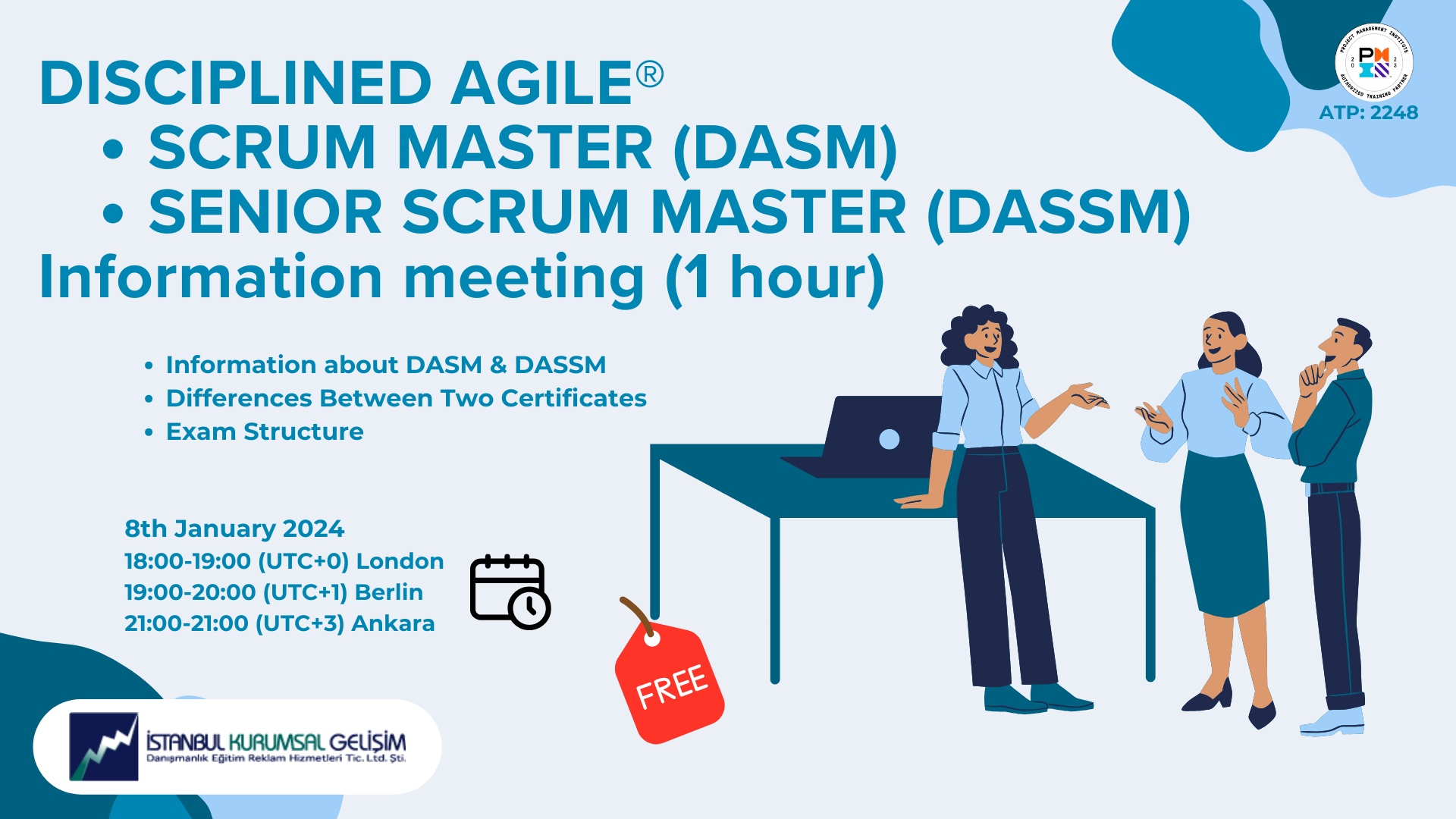
To register, follow the link please.
Understanding and Managing Your Product Backlog

Section 1: Overview of the Product Backlog
The Product Backlog is an essential tool for Agile software development teams. It is an ordered list of items that represent the features, enhancements, and fixes that the team plans to work on. The Product Backlog consists of Product Backlog Items (PBIs), which are organized based on their priority and level of detail.
PBIs are classified into four types: Themes, Epics, User Stories, and Tasks. Themes are long-term goals or high-level business objectives. Epics are substantial PBIs that need to be broken down into smaller user stories. User Stories are single, meaningful PBIs that can be completed within a sprint. Tasks are the specific tasks required to achieve a user story.
Section 2: Building Your Product Vision and Product Goal
The Product Vision describes the desired future state or result of a product. It sets a clear objective for the development team and stakeholders, guiding their actions and choices throughout the product development journey. The Product Goal represents a target for the Scrum Team to align their planning efforts. It encapsulates the long-term objective that the Scrum Team aims to achieve, emphasizing the need to complete or abandon one objective before pursuing the next.
Section 3: Creating Product Backlog Items (PBIs)
To create good PBIs, you can follow the INVEST acronym, which outlines key characteristics of well-formed and effective user stories. PBIs should be independent, negotiable, valuable, estimable, small, and testable. Each PBI should be self-contained and able to be worked on and delivered separately from other PBIs. PBIs should be open to discussion and collaboration between the development team and stakeholders. Each PBI should deliver value to the customer or end-user. PBIs should be able to be estimated in terms of effort or complexity. PBIs should be small enough to be completed within a single sprint or iteration. Each PBI should have clear acceptance criteria that can be used to verify its successful completion.
Section 4: Checking the Quality of PBIs
The 3C Model provides a framework for creating and refining PBIs. It emphasizes three key aspects: Card, Conversation, and Confirmation. The PBI is represented by a physical or virtual card that captures the essential information about the item. The card serves as a catalyst for a conversation between the development team and the stakeholders, discussing implementation details and clarifying any questions or concerns. The confirmation step involves defining specific acceptance criteria or tests that must be met for the PBI to be considered complete.
Section 5: Balancing the Product Backlog Prioritization
The product backlog prioritization quadrants offer a useful tool for managing and prioritizing the items in a product backlog. The quadrants help the Product Owner and the team strike a balance between different types of backlog items and make informed decisions about their sequencing. The quadrants divide the backlog into four quadrants: new features, architectural innovation, support, and technical debt.
Section 6: Managing the Quality of Product Backlog
The DEEP acronym provides guidance for managing the Product Backlog in Agile software development. The items at the top of the Product Backlog should be detailed enough to provide a clear understanding of what needs to be done. The Product Backlog is not fixed or set in stone and should evolve and emerge as new information and insights become available. Each item in the Product Backlog should have a relative estimation of its effort or complexity. The Product Backlog should be prioritized based on the value and importance of the items.
Section 7: Product Backlog Refinement
Product Backlog Refinement is the process of breaking down and further defining Product Backlog items into smaller, more precise items. It is an ongoing activity to add details, such as a description, order, and size. Refinement sessions should occur at least once per Sprint to ensure the Product Backlog remains current and actionable. The Product Owner, Scrum Master, and Developers can initiate refinement sessions whenever necessary to maintain the Product Backlog’s quality and ensure a shared understanding of the upcoming work.
Task Dependencies in Agile

Agile methodology may not be suitable for projects with many task dependencies. Agile teams work in an iterative manner and focus on delivering value quickly and continuously. However, if there are many dependencies that must be resolved before work can proceed, this can slow down the team’s ability to deliver value quickly. In such cases, other project management methodologies may be more appropriate.
For example, waiting for a lead time of a product can have negative impacts on the agile team’s ability to deliver value in a timely manner.
If an agile team waits for a lead time of a product, it can lead to several consequences. Firstly, it can cause delays in the delivery of the product, as the team is dependent on the lead time of the product before they can proceed with their work. This can lead to missed deadlines and unhappy customers.
Secondly, waiting for a lead time of a product can disrupt the flow of the team’s work. Agile teams work in short iterations, with a focus on delivering value quickly and continuously. Waiting for a lead time of a product goes against this principle and can cause the team to lose momentum and motivation.
Lastly, waiting for a lead time of a product can lead to a lack of transparency and communication between the team and stakeholders. The team may not be aware of the status of the product, which can lead to misunderstandings and miscommunication.
Are Ceremonies Waste of Time?

Scrum ceremonies are an integral part of the Scrum framework, which is widely used in Agile software development. They are designed to facilitate communication and collaboration among team members, and ensure that everyone is aligned with the project goals.
However, some people may argue that these ceremonies are a waste of time, as they can be seen as unnecessary interruptions to the actual work that needs to be done. They may feel that these meetings take away from the time that could be spent on actual development work, and that the time spent on these ceremonies is not productive.
Despite these concerns, it is important to note that Scrum ceremonies serve a crucial purpose in Agile development. They provide a structured framework for communication and collaboration, which is essential for the success of any project. By ensuring that everyone is on the same page, and that any issues or concerns are addressed in a timely manner, Scrum ceremonies can help to prevent misunderstandings and delays.
In addition, Scrum ceremonies can actually save time in the long run. By catching problems early on, and addressing them in a timely manner, teams can avoid costly rework and delays down the road. By ensuring that everyone is aligned and working towards the same goals, Scrum ceremonies can help to keep everyone accountable and focused on the tasks at hand.
Overall, while some people may view Scrum ceremonies as a waste of time, it is important to recognize the value that they bring to Agile development. By providing a structured framework for communication and collaboration, these ceremonies can help to ensure the success of any project.
20% Off for a while
https://www.etsy.com/de-en/listing/1436567134/scrum-for-project-managers?ref=listings_manager_grid
Best Practices for Creating a Strong Product Backlog

At the core of every successful agile project lies a well-defined product backlog. This list includes all the items that need to be delivered as a part of the solution, and it is typically made up of features, requirements, or user stories. These items are ranked in order of importance to the customer or the business. Think of it like a shopping catalog, where you circle the things you want, but not everything is guaranteed to be delivered.
The product backlog can be stored in a variety of formats, such as a spreadsheet, a requirements management tool, or even a physical list. What’s important is that it’s consistently maintained and adjusted as needed. A well-defined product backlog ensures a smooth flow of work and helps to prioritize tasks in order of business value. It also helps to eliminate unnecessary work by identifying items that are no longer required.
To ensure that your product backlog is well-defined, keep in mind the acronym SMART:
Specific
Each item on the product backlog should be specific and clear, outlining what needs to be accomplished and why it’s important. For example, instead of listing “Improve website usability,” you might list “Reduce the number of steps required to complete a purchase on the website from 5 to 3.” The more specific your item is, the easier it is to determine its relevance and priority.
Measurable
In order to track progress and prioritize work, each item on the backlog should be measurable. This means that you should be able to quantify the work required and estimate how long it will take to complete. For example, you might estimate that reducing the number of steps to complete a purchase will take 2 weeks of development time. By estimating the time required for each item, you can accurately predict the completion date and make more informed decisions.
Achievable
While it’s important to dream big, each item on the backlog should also be achievable within the constraints of your team and resources. Make sure that each item is realistic and can be accomplished with the time and resources you have available. Setting unrealistic goals can lead to frustration and ultimately, project failure.
Relevant
Only items that are relevant to the project’s goals and objectives should be included in the product backlog. This means that each item should be tied to a specific business need or customer problem that needs to be addressed. By keeping the backlog relevant, you can ensure that your team is working on tasks that are aligned with the project’s goals.
Time-bound
Finally, each item on the product backlog should be time-bound and have a clear deadline or target completion date. For example, you might set a goal to complete the website purchase improvement project within the next 3 months. By setting clear deadlines, you can motivate your team and ensure that each item is completed in a timely manner.
By following these guidelines and creating a SMART product backlog, you’ll be well on your way to delivering a successful project. Remember, a well-defined product backlog is an essential part of any successful project, and it ensures that your team is working on tasks that are aligned with your project’s goals and objectives.
 Gökrem Tekir Blog Sayfası