PMP Question 1

You’re leading a new project to develop an innovative software application. The team comprises members from different departments, each bringing unique skills and experiences. To ensure everyone is aligned from the outset, you decide to create a Team Charter.

What is the primary focus when drafting the Team Charter for your project team?

A) Listing the technical specifications of the software application to ensure all developers understand the project requirements.

B) Outlining each team member’s daily tasks for the first month to kickstart the project with clear direction.

C) Establishing shared values, communication guidelines, and conflict resolution methods to foster a collaborative team environment.

D) Documenting a detailed project timeline, including milestones and deadlines, to track project progress effectively.


In launching our software development project, we’re bringing together diverse talents and perspectives. The key to harmonizing these differences lies in our Team Charter. It’s not just a document; it’s a declaration of our collective commitment to openness, respect, and shared goals. By focusing on our values, how we communicate, and resolve disputes, we lay the groundwork for a project defined by collaboration and innovation. This process ensures that every voice is heard and every contribution valued, setting the stage for our project’s success.


Correct Answer: C

Reason: A Team Charter’s primary purpose is to align team members on the project’s foundational aspects, such as values, communication, and conflict resolution, ensuring everyone works cohesively.

Incorrect Answers:

A) Technical specifications are part of project documentation but not the focus of a Team Charter.

B) Daily task assignments are too granular for a Team Charter, which aims at broader team alignment.

D) A detailed project timeline is part of project planning documents, not the Team Charter, which focuses on team dynamics and collaboration.


Projelerde Yaşadıklarınızı Anlatmak İster misiniz?

Photo by Tima Miroshnichenko on Pexels.com

Projelerinizde yaşadıklarınızı benimle paylaşmak ister misiniz?

İster bireysel, ister ekip olarak.

İsterseniz sadece siz anlatırsınız, ben dinlerim; İsterseniz tecrübelerime dayanarak fikrimi de söylerim.

  • Ekibinizle iletişim kurmada sorunlar mı yaşıyorsunuz?
  • Ekibinizin içindeki yaşanan iletişim sorunlarından şikayetçi misiniz?
  • Çatışmaları yönetmede zorlanıyor munusunuz?
  • Liderlik vasıflarınızın eksik olduğunu mu düşünüyorsunuz?
  • Zaman yönetiminde sorunlar mı yaşıyorsunuz?
  • Müşterinize “hayır” diyemediğiniz için ekibiniz sizi suçluyor mu?
  • Müşterinize “hayır” dediğiniz için üst yönetiminiz sizi suçluyor mu?
  • Her kafadan yükselen sesler karşısında kendinizi çaresiz mi hissediyorsunuz?
  • Bir çok işin arasında onaylar için şirket içi bürokrasi ile mi uğraşıyorsunuz?
  • Pek çok sorumluluklarınız olmasına rağmen yeterince yetkiniz olmadığını mı düşünüyorsunuz?
  • Haksız yere projenizin başarısız olarak damgalandığını mı düşünüyorsunuz?
  • Başarısına inanmadığınız projelerde çalışmak zorunda mı kalıyorsunuz?
  • Projenizde fikirlerinize değer verilmediğini mi hissediyorsunuz?
  • O kadar çalışmaya karşı daha fazlasını mı hak ettiğinizi düşünüyorsunuz?
  • Kariyer gelişiminiz açısından hakkınızın yendiğini mi düşünüyorsunuz?
  • Kariyer gelişiminize fırsat verilmediğini mi düşünüyorsunuz?
  • Eğitim ve gelişim desteği alamadığınızı mı düşünüyorsunuz?
  • Aldığınız eğitim veya sertifikaların, bulunduğunuz şirkette değer görmediğini mi düşünüyorsunuz?
  • Aldığınız eğitim veya sertifikalardan dolayı, başkalarının sizi çekemediğini mi düşünüyorsunuz?
  • Projelerin yoğunluğundan dolayı ailenize zaman ayıramıyor musunuz?
  • Projelerin yoğunluğundan dolayı sosyal hayatınız, yok olma seviyesine mi geldi?

Randevu talep edin, konuşalım.

Task Dependencies in Agile

Agile methodology may not be suitable for projects with many task dependencies
Photo by Joey Kyber on Pexels.com

Agile methodology may not be suitable for projects with many task dependencies. Agile teams work in an iterative manner and focus on delivering value quickly and continuously. However, if there are many dependencies that must be resolved before work can proceed, this can slow down the team’s ability to deliver value quickly. In such cases, other project management methodologies may be more appropriate.

For example, waiting for a lead time of a product can have negative impacts on the agile team’s ability to deliver value in a timely manner.

If an agile team waits for a lead time of a product, it can lead to several consequences. Firstly, it can cause delays in the delivery of the product, as the team is dependent on the lead time of the product before they can proceed with their work. This can lead to missed deadlines and unhappy customers.

Secondly, waiting for a lead time of a product can disrupt the flow of the team’s work. Agile teams work in short iterations, with a focus on delivering value quickly and continuously. Waiting for a lead time of a product goes against this principle and can cause the team to lose momentum and motivation.

Lastly, waiting for a lead time of a product can lead to a lack of transparency and communication between the team and stakeholders. The team may not be aware of the status of the product, which can lead to misunderstandings and miscommunication.

Why Methodologies Should Be Viewed as Tools, Not Goals

Photo by Kampus Production on Pexels.com

Project management methodologies are important tools for achieving successful project outcomes. They provide a framework for managing and completing a project successfully. However, it is important to remember that they are simply tools and not goals in and of themselves. Different methodologies have different strengths and weaknesses, and it is important to be knowledgeable about them in order to select the one that best suits your team’s needs.

Being a fan of a specific methodology can be detrimental to the success of a project. A project manager must not become overly attached or “fanatical” about any one particular methodology. Rather, they should be knowledgeable about different methodologies and use the approach that is best suited for the current phase of the project.

To ensure the success of a project, a project manager must be flexible and adaptable to the changing needs of the project. This means that they should be able to recognize when a particular methodology is no longer effective and be willing to switch to a different approach that better suits the project’s current phase.

Flexibility and adaptability are key skills that a project manager must possess. Project management is an ever-evolving field, and what works well today may not work as well tomorrow. Therefore, a project manager should always be knowledgeable about different methodologies and use the approach that is best suited for the current phase of the project.

It is important to keep in mind that your boss will mainly be interested in the results of your project, rather than the specific methodology you used to achieve them. The project’s success is what matters most, and the methodology used to achieve that success should be viewed as a tool, not a goal in and of itself.

In summary, project management methodologies are important tools for achieving successful project outcomes, but they should not be viewed as the end goal. By remaining flexible and adaptable, and focusing on delivering high-quality results, you can ensure that your projects are successful, regardless of the methodology you use. A project manager must possess key skills such as flexibility and adaptability to ensure that they are using the approach that is best suited for the current phase of the project.


Servant Leader

A servant leader is a person who serves the team members and helps them to achieve their goals. In Scrum approach, a servant leader plays a crucial role in facilitating the Scrum process and ensuring that the team is functioning effectively.

The servant leader serves the team in several ways in Scrum. Firstly, the servant leader helps the team to understand the Scrum framework and provides guidance on how to implement it effectively. This involves educating the team members on the principles and values of Scrum, and how they can apply them to their work. They work closely with the Scrum Master to ensure that the team is following the Scrum process and that any issues are resolved quickly. The servant leader also helps the team to define their goals and objectives, and how they can align them with the project’s vision.

Secondly, the servant leader fosters a collaborative environment where team members can work together effectively. They encourage open communication, trust, and respect among team members. The servant leader also helps to identify and remove any obstacles that may be hindering the team’s progress. They facilitate meetings and discussions to ensure that everyone’s ideas and opinions are heard and considered. By creating an environment where team members feel safe to share their thoughts, the servant leader can unlock the team’s full potential.

Thirdly, the servant leader supports the team by providing them with the necessary resources and tools to complete their work. They ensure that the team has access to the right technology, training, and support to deliver high-quality work. The servant leader also helps the team to manage their workload and balance their priorities. They provide feedback and coaching to team members to help them improve their skills and become more productive.

In conclusion, a servant leader serves the team in Scrum by providing guidance, fostering a collaborative environment, and supporting the team with the necessary resources and tools. By doing so, they help the team to work together effectively and achieve their goals. The servant leader is a crucial member of the Scrum team, and their role is essential for the success of the project.

Does a Servant Leader help Personal Lives

A servant leader’s primary responsibility is to serve the team by facilitating the Scrum process and ensuring that the team is functioning effectively. Although a servant leader may be supportive of team members’ personal lives, their primary focus is on the project and the team’s work.

That being said, a servant leader may still be able to support team members outside of their project work, depending on the specific circumstances. For instance, suppose there are two young people on the Scrum team who need to find a house to live in after their wedding. In this case, it may not be expected for the servant leader to directly assist them in their house renting process.

However, the servant leader can still support team members by helping them manage their workload effectively. By doing so, team members can have more time to search for a house outside of work hours. The servant leader can also suggest ways for team members to prioritize their tasks so that they can balance their personal and professional lives more effectively.

Furthermore, if team members’ personal situations are affecting their work, the servant leader can work with the Scrum Master to find a solution that benefits both the team and the project. For example, the servant leader can suggest a temporary adjustment to the team’s work schedule so that team members have more time to search for a house. Alternatively, the servant leader can help team members delegate some of their work to other team members so that they can focus on finding a house.

What does a servant leader do in a day?

A servant leader’s day-to-day activities are highly dependent on the needs of the team and the project. One of their key responsibilities is to meet with team members individually to provide guidance and support. This includes listening to their concerns, answering their questions, and providing them with the resources they need to succeed. Additionally, a servant leader will often facilitate meetings and discussions among team members to ensure that everyone is on the same page and that progress is being made.

Furthermore, a servant leader will help to remove any obstacles that may be hindering the team’s progress. This could involve identifying a lack of resources, clarifying ambiguous requirements, or resolving conflicts between team members. They will also work closely with the Scrum Master to ensure that the team is following the Scrum process and that any issues are resolved quickly.

Another key aspect of a servant leader’s role is providing feedback and coaching to team members. This includes providing constructive criticism and helping team members identify areas for improvement. They will also work with team members to develop skills and competencies that will help them become more productive and effective. Ultimately, a servant leader’s goal is to serve the team by helping them to achieve their goals and work together effectively, while also fostering an environment of continuous learning and improvement.


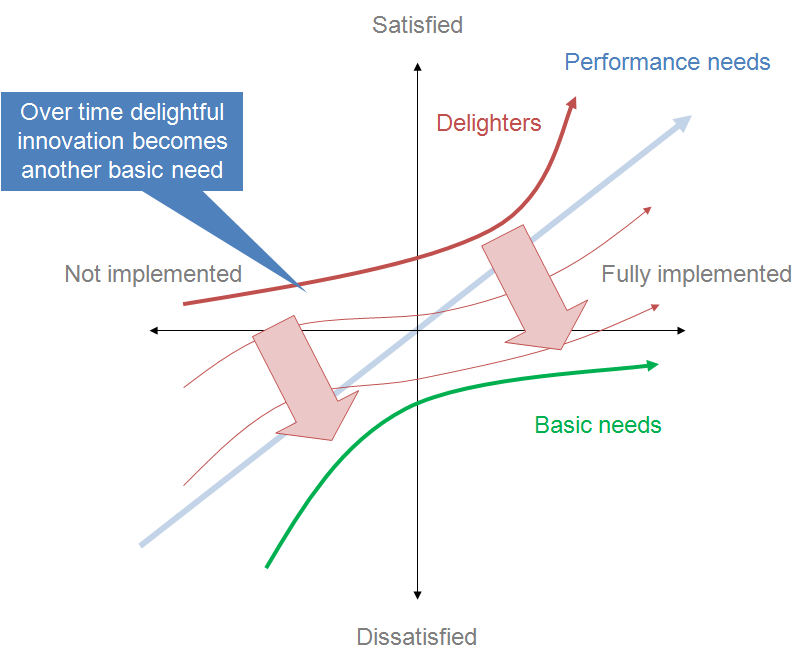
Kano Model

The Kano model is a theory of product development and customer satisfaction. It was developed by Japanese researcher Noriaki Kano in the 1980s. The model helps businesses understand and prioritize which features of their product or service will most effectively satisfy and delight customers.

The Kano model categorizes product features into three groups:

  1. Must-have or basic features
  2. Performance features
  3. Delight features

The must-have features are the basic features that customers expect a product or service to have to meet their minimum requirements. If these basic features are not present, customers will be dissatisfied. For example, a smartphone must have a functioning touchscreen and the ability to make phone calls.

Performance features are features that are important to customers and can increase customer satisfaction, but their absence won’t necessarily lead to dissatisfaction. For example, a smartphone that has a long battery life or a high-quality camera.

Delight features are unexpected features that can create a positive emotional response from customers. These features can set a product or service apart from competitors and can create loyal customers. For example, a smartphone that has a built-in projector or has a unique design.

In summary, the Kano model helps businesses to understand what features of their product or service are most important to customers and how to prioritize their development efforts. By focusing on delight features, businesses can create a unique selling point and increase customer loyalty.


Scrum for Project Managers E-Book (PDF) 1.0

Are you tired of managing projects that seem to drag on forever? Do you feel like you’re constantly putting out fires instead of making real progress? It’s time to try a new approach.

Introducing Scrum for Project Managers, the e-book that will revolutionize the way you approach project management. Our comprehensive guide will teach you everything you need to know about Scrum, an agile project management framework that has been proven to increase productivity, improve communication, and deliver results.

In this e-book, you’ll learn the basics of Scrum, including how to create and manage a product backlog, how to conduct sprint planning and review meetings, and how to effectively communicate with your team. You’ll also discover advanced techniques for improving team collaboration, managing stakeholder expectations, and delivering high-quality products on time and within budget.

Whether you’re a seasoned project manager or just starting out, Scrum for Project Managers is the must-have resource for anyone looking to improve their project management skills. And with our easy-to-read format and practical advice, you’ll be able to start implementing Scrum in your projects right away.


Chapter 1- Scrum Approach

  • The Agile Manifesto and the Birth of Scrum. 10
  • Overview of Scrum Framework 12
  • Scrum Artifacts 14
  • Organizational Goals in Scrum 16
  • What is the Backlog? 19

Chapter 2 – Product Backlog

  • Product Backlog in Scrum 23
  • An Example of Scrum Practice 25
  • User Stories 27
  • Refining and Estimating Product Backlog 30

Chapter 3 – Sprint Backlog

  • Sprint Backlog 35
  • Sprint Scope and Sprint Goal 37

Chapter 4 – Definition of Done

  • Increment and Definition of Done 42
  • More Details of “Definition of Done” 45
  • When should the DoD be Prepared? 48
  • Definition of Done vs. Acceptance Criteria 50

Chapter 5- Scrum Events

  • What are Scrum Events? 53
  • What is a Time Box? 55
  • More Details About The Sprint 57
  • Sprint Planning Event 59
  • Why is the Sprint Valuable? 61
  • What can be Done in the Sprint? 63
  • How will Things Be Done in the Sprint? 66
  • Who Attends the Sprint Planning Meeting? 68
  • Coherency of Sprint Backlog Items 70
  • Daily Scrum 72
  • Sprint Review Meeting 74
  • Sprint Retrospective Meeting 76
  • Understanding Epics 80
  • Special Sprints 83
  • Canceling a Sprint 85

Chapter 6 – The Scrum Team

  • Scrum Team 88
  • Scrum Team Size 90
  • Product Owner 92
  • What is Value 94
  • How is the Product Backlog Ordered? 96
  • The Developers 98
  • The Scrum Master 100
  • How does the Scrum Master serve to the Scrum Team 102
  • What is an Impediment in Scrum? 104
  • How does the Scrum Master serve to the Product Owner? 106
  • How does the Scrum Master serve to the Organization 108
  • Other Titles in Scrum 110

Chapter 7 – Scaling Scrum

  • Introduction To Scaling Scrum 115
  • What happens when multiple Scrum Teams work on the same Product? 117
  • Impact on velocity when scaling Scrum 118
  • Integrated Product Increments 120
  • The Definition of Done when multiple teams work on the same Product 122
  • Must the Sprints be aligned? (same length, same start/end) 124
  • How many Product Owners are there? 126
  • Feature teams vs Component teams 128
  • The importance of creating an integrated Increment 130

Chapter 8 – Terms and Tools Used in Scrum

  • The Velocity of the Scrum Team 134
  • Technical debt 136
  • Functional and non-functional requirements 138
  • The process of emergence in Scrum 140
  • Burn-down charts 142
  • Burn-up charts 144
  • The “cone of uncertainty” 146

Chapter 9 – Agile Framework and Practices

  • Agile Framework Overview 150
  • Kanban 152
  • Extreme Programming (XP) 155
  • Test-driven development (TDD) 157
  • Behavior-driven development (BDD) 159
  • DevOps 161

Chapter 10 – FAQ about Scrum

  • Is Documentation Mandatory in Scrum? 165
  • What happens with incomplete Sprint Backlog items? 167
  • Who creates the Definition of Done? 168
  • How to change scope without affecting the Sprint Goal? 170
  • What happens if there is no Increment and/or the Sprint Goal is not reached? 171
  • The difference between Product Backlog Refinement and Sprint Planning 173
  • What is the difference between creating an Increment and Releasing it? 175

About The Author

Gökrem Tekir graduated from Anadolu University in 1997 as an Industrial Engineer.

He worked as a project engineer in different companies in the production and service sector. He earned the PMP Certificate in 2004.

After receiving the PMP Certificate, he continued his career as a Project Management Trainer and Consultant.

Among the trainings he gave, there are topics such as Fundamentals of Project Management, Agile Project Management, Scrum Approach, Project Planning and Follow-up with Microsoft Project, PMP Exam Preparation.

The consultancy services offered by Gökrem Tekir are the Establishment and Integration of Project Management Offices, Microsoft Project Server and Sharepoint Integration, Development of Enterprise-Specific Project Management Methods, Planning and Reporting of Projects Between Buyer and Sellers, Creation and Follow-up of Project Plans of Institutions, Projects of Employees. It is listed as Adapting to Management Methods.

Gökrem Tekir is the author of the first Turkish-language Project Management book in 2006. In 2017, a much more comprehensive work titled “Our Life is the Project – Project Manager’s Handbook” was also published.

Gökrem Tekir continues to share information on social networks such as Youtube, Linkedin, Twitter and Instagram in order to spread his knowledge on project management.


https://buy.stripe.com/6oE4jv5Fo8K7fNC5kx

  • Download link will be active after payment site.
  • When the new version is published, it will be sent to the email of the buyer.

Buy on ETSY.com


Buy on Kindle

10- Sprint Birikim Listesi

Her sprint planlama toplantısında ürün sahibi, ürünün değerini, diğer ifadeyle kıymetini, artırmak için bir sonraki adımda yapılması gerekeni Scrum ekibine anlatır. Ve tüm Scrum ekibi, sonraki sprintin hedefini oluşturmaya odaklanır.

Scrum ekibi, ürün sahibi ile işbirliği yaparak, ürün birikim listesinin en üstünden başlayarak hangi öğelerin sprint birikim listesine ekleneceğine karar verecektir.

Ayrıca, sprint birikim listesi, ürün artışını sağlamak ve sprint hedefini gerçekleştirmek için bir plan içerir.

Tam bu noktada, ürün birikim listesi ile sprint birikim listesi arasındaki farkı anlamak için kısa bir açıklama yapalım.

Ürün birikim listesi, üründe olması gereken veya olabilecek fikirlerin veya özelliklerin sıralı bir listesidir. Sprint birikim listesi, her sprint’in başında sıfırdan oluşturulur ve mevcut sprint’te yapılacak ürün iş listesi öğelerini ve planı içerir. Sprint birikim listesindeki tüm öğeler, ürün birikim listesinden gelir.

Plan ise ortaya çıkacak fonksiyonun ve sprint hedefinin nasıl sağlanacağını açıklar. Plan, scrum ekibinin bir artış oluşturmasına izin veren ürün birikim listesi öğesinin ayrıştırılmasıdır. Ayrıştırma ile sprint içinde yapılacak aktiviteler tanımlanmış olur.

Ürün birikim listesi kalemleri, NE’yin teslim edileceğini açıklar. Plan, bunun NASIL olacağını ele alır. Sprint hedefi, sprintin NEDEN değerli olduğunu gösterir. Hepsi, sprint birikim listesinin bir parçasıdır.

Scrum ekibi, bir sprint için ürün birikim listesi öğelerini seçtiklerinde, neyin teslim edileceğine dair bir tahmin oluşturmuşlardır. Sprint için yapılan tahminler asla bir garanti, söz veya taahhüt değildir. Sprint sırasında beklenmedik şeyler olabilir.

Sprint birikim listesini, yalnızca sprint sırasında var olan geçici bir yapı olarak görüntüleyebilirsiniz. Her sprintin yeni bir sprint birikim listesi olacaktır. Sprint’in sonunda sprint birikim listesinde kalan herhangi bir bitmemiş iş, ürün birikim listesine geri konulacaktır.

Bundan sonra ne olması gerektiğine ürün sahibi karar verecektir. Ürün birikim listesi, ürün sahibinin sorumluluğundayken, sprint birikim listesinden, scrum ekibi sorumludur.

Ekip, sprint hedefine ulaşmak için, sprint boyunca gerekli gördükleri değişiklikleri yapabilir. Yapılması gereken işleri belirlediklerinde, sprint birikim listesine eklemeler de yapabilirler.

Sprint birikim listesinde kalan toplam iş, her gün en az bir kez yapılan toplantı ile takip edilir. Ekip üyeleri, sprint hedefine doğru ilerlemeyi takip etmekten sorumludur.

Eğitimlerimiz için İstanbul Kurumsal Gelişim’in Web Sitesini Ziyaret Edebilirsiniz.

Youtube Üzerindeki Videolu Eğitimleri Buradan İnceleyebilirsiniz.

UDEMY Eğitimlerim

5- Birikim Listesi Nedir?

Scrum’daki en temel eser, ürün birikim listesidir.

Ürün birikim listesi, ürünü ortaya çıkarmak için hazırlanır. Ürün ise, kullanıldığında fayda sağlayan her şey olabilir. Bilgisayar, araba, telefonunuzdaki bir uygulama veya bir bilgisayar oyunu düşünebilirsiniz. Ürünü kullanan kişiler üründen fayda elde ettikçe bir değer üretilmiş olur. Elde edilecek fayda artıkça, ürünün değeri yani kıymeti de artar.

Basit bir örnek vermek gerekirse, yeni bir akıllı telefon satın aldığınızda, pek çok işinizi bilgisayarınızı açmadan yapar hâle gelebilecekseniz, alacağınız telefon, size zaman ve mekan özgürlüğü getirecektir. Bu özgürlüğe ulaşmak için, telefona biçilen değeri ödemeye hazırsınız, çünkü bu sayede siz de, yaşam kalitenize değer katmış olacaksınız.

Gelelim birikim ifadesine.

Ürün Birikim listesi, hedeflenen ürünün ortaya çıkabilmesi için tamamlanmayı bekleyen ihtiyaçlardır. Bu nedenle, ürün birikim listesi, ürünle ilgili yapılmamış başlıkları içerir. Bunu, Yapılacaklar Listesi olarak da görebiliriz.

Örneğin tatile gitmek istiyorsunuz. Tatilinizin keyifli geçmesi için yapılacaklar listesi oluşturmaya başlarsanız şu maddeler aklınıza kolayca gelecektir.

Nereye gitmek istediğinize karar vermek.

Uçuş rezervasyonu yapmak.

İşyerinizden yıllık izin talep etmek.

Tatil için alışveriş yapmak.

Pasaport – Vize işlemleri yapmak.

Otel rezervasyonu yapmak.

Bu maddelerin hiç birisi henüz yapılmadı. Yapılmayı bekleyen işlerin birikimi olarak listeledik.

Bu arada, listedeki öğeleri aklımıza geliş sırasına göre yazdık. Bizim, bu maddeleri yapılış sırasına göre dizmemiz gerekecektir.

Yapmanız gereken ilk şey ne olurdu? Örneğin, yıllık izninizi almadan, uçak bileti alamazsınız, çünkü istediğiniz tarihte izin alıp, alamayacağınızı henüz bilmiyorsunuz ve bu belirsizlikten dolayı, uçak bilet parasını riske atmak istemezsiniz.

Benzer şekilde, ne zaman ve nereye gideceğinizi bilmeden, otel rezervasyonu yapamazsınız. Gideceğiniz yeri kesinliğe kavuşturduğunuzda ve yıllık izinle ilgili belirsizlik de ortadan kalkınca, otel rezervasyonu yaptırmak risklerinizin azalmasını sağlayacaktır.

Özetle, birikim listesinin içindeki maddeleri, sizi hedefinize ulaştıracak şekilde sıralamanız gerekecektir.

Bazen, yapılması gereken maddeleri yazmış olsanız bile, halen bu maddelerin iç detayları belirsizlik içerebilmektedir.

Örneğin; nereye gideceğinize karar verme konusunu eşinizle konuşuyorsunuz. Eşiniz, tatilde farklı kültürleri tanımak istediğini, müzelerin, tarihi eserlerin yoğun olduğu bir yere gitmek istediğini söylese, buna karşılık siz de sene boyunca çok yorulduğunuzu ve ağırlıklı olarak denize girmek ve hareketli olmayan bir tatil istediğinizi belirtseniz, bu birikim maddesi üzerine beklentiler konuşulmaya başlanmış olur. Amaç, müzakere yoluyla birikim listesindeki maddelerin içeriğini tanımlamak ve belirsizlikleri azaltmaktır. Anlaşmaya çok kısa sürede varmak mümkün olmayabilir, önemli olan paydaşların isteklerini açık ve net olarak birbirlerine anlatabilmeleridir. Buna, şeffaflık diyoruz.

Bir birikim maddesini, daha fazla detaylandırmak gerektiğinde, örneğin, gidilecek yerdeki tarihi mekânları belirleme, araç kiralama, bir rehber ile anlaşma, gezilecek yerlerin rotasını çıkarma gibi ayrıntıları açmak mümkündür. Buna, iyileştirme diyoruz.

Üzerinde anlaşılan bir birikim maddesinin beklenene uygun olarak yapılıp, yapılmadığı proje boyunca kontrol edilmelidir. Buna da tetkik veya denetim diyoruz.

Denetimler esnasında, bir takım eksiklikler ortaya çıkabilir veya baştan düşünülemeyen durum ve şartlarla kaşılaşabiliriz. Örneğin, yurtdışı geziniz için tüm ayarlamaları yaptınız fakat gideceğiniz ülkeden vize alamadığınızı düşünün. Planlarınızı hızlıca değiştirip, yurt içi organizasyona dönüş yapmanız gerekebilir. Buna adaptasyon diyoruz.

4- Scrum Yaklaşımında Organizasyonel Hedefler

Bugün hayatımızın içindeki pek çok ürün, organizasyonların ortaya koyduğu vizyonların sonucudur.

Bir firma, dünyanın en iyi bilgisayarını üretme vizyonuna sahiptir ve bunu ortaya koyduğu ürünlerle sağlayabilir.

Bir başka firma, müşterilerine 10 dakika içinde sıcak yemek servisi verme vizyonuna sahiptir ve oluşturduğu restoran ağı ile bu imkanı sunabilecek seviyeye gelir.

Bir başkası, dünyanın en yüksek güvenlik seviyesine sahip otomobilini yapmayı hedefler ve tüm kaynaklarını bu konuda uzmanlaşmaya ve ürünler üretmeye yönlendirebilir.

Bu çerçevede, bir kuruluşun geliştirmeye çalıştığı ürün, şirketin vizyonuna göre şekillenmektedir. Vizyon, o kuruluş için iddialı hedeftir. Her şirket, dünya genelinde iddialı hedefler koymak zorunda değildir. Elbette, iç pazara yönelik ürün geliştiren bir şirket de kendisi için iddialı hedefler tanımlayabilir.

Organizasyonun üst yönetimi, bir vizyon tanımı yaptığında, bu vizyona hizmet edecek ürünü yapmak üzere ara hedefler belirlenir. Örneğin, aya insanlı bir uzay aracını ilk defa indireceğimizi hayal edelim. Biz, bunu iddialı bir hedef olarak tanımlıyoruz. İlk hazırladığımız roketlere insanları yerleştirip, gönderemeyiz. Öncelikle, insansız roketleri gönderip, geri dönen parçaların sorunsuz olarak geri döndüğünden emin olmamız gerekir. Bundan emin olduktan sonra, hayvanları, kobay olarak gönderip, onların da sağlam döndüklerinden emin olmamız gerekir. Bütün bu evreler esnasında proje ekibi de pek çok yeni bilgi edinir ve varsa hataları düzelterek, ürünü iyileştirir. İnsanlı bir aracı göndermek, en son adım olarak görülmelidir. Böylece, risk ve belirsizliklerin neredeyse tamamen ortadan kaldırıldığından emin olmalıyız.

Scrum yaklaşımında işler, ilginç bir şekilde yukarıdaki örneğe benzer.

Bir ürün oluştururken, vizyonla uyumlu bir ürün hedefi ortaya koymak gerekir. Scrum Kılavuzu, bir vizyondan bahsetmese de, genellikle şirketlerin stratejik hedefleri çerçevesinde vizyon tanımlanır.

Ürün hedefi, uzun vadeli bir hedefi temsil eder. Bir proje ekibinin odaklandığı yalnızca bir ürün hedefi vardır. Böylece, ortak enerjiyi tek bir hedefe yönlendirmek mümkün olacaktır.

Ulaşılan her sprint hedefi ve teslim edilen her artış, ürün hedefine ulaşmak için bir adımdır. Scrum’a dahil olan herkes, yapılan işlerin sprint hedefine, ürün hedefine ve daha geniş ürün vizyonuna ulaşmakla ilişkili olduğunu anlamalıdır.

Kariyere Hız Katmak

Kariyerine Hız Katmak İsteyen Yeni Mezunlardan mısınız? Size Yardımcı Olabiliriz.

Photo by MD Duran on Unsplash

Üniversiteden mezun oldunuz ve 2 ay ne çabuk geçti. Herhalde dinlenmişsinizdir; Şimdi artık iş arama yarışı sizi bekliyor.

Peki, rakiplerinizin önüne geçmek için sadece diploma yeterli mi? Kendinizi biraz daha fazla geliştirmek adına Proje Yönetimi konusuna eğilmeye ne dersiniz?

Şu araştırmaya bir göz atmanızı öneririm.

The global economy needs 25 million new project professionals by 2030. To close the talent gap, 2.3 million people will need to enter PMOE every year just to keep up with demand — this includes project managers and all change makers.

Kaynak Link

İstanbul Kurumsal Gelişim olarak size nasıl yardımıcı olabiliriz?

Proje Yönetimi eğitim ve danışmanlığı konusunda Türkiye’nin en köklü kuruluşuyuz. Faaliyetlerimize 2000 yılında başladık ve www.projeyonetimi.com web sitemiz üzerinden yaptığımız hizmetlerimizi duyurmaktayız.

Proje yönetimi eğitim ve danışmanlığı üzerine Türkiye’deki en deneyimli kadroya sahibiz.

Dünyaca kabul edilmiş ve merkezi Amerika’da bulunan Project Management Institute (PMI®) bilgi birikimini temel alarak, Proje Yönetimi, Çevik Proje Yönetimi, Microsoft Project Kullanarak Proje Planlama ve Takibi, PMP Sertifikası Sınavına Hazırlık vb. konularda eğitim hizmetleri sunmaktayız. Detay bilgileri web sitemizden alabilirsiniz.

Diğer yandan, PMI®’ın Türkiye’de Yetkili Eğitim Ortağı (Authorized Training Partner) olarak kabul ettiği ilk şirket İstanbul Kurumsal Gelişim’dir.

Kariyeriniz Dünyada Geçerli Olsun

Proje yönetimi üzerine uzmanlaştıkça, kariyerinize dünyanın farklı ülkelerinde devam etme şansını da kolayca bulabilirsiniz.

Yukarıdaki linkte gördüğünüz üzere proje bazlı çalışma dünya genelinde hızla yayılan bir çalışma modeli. Artık, iş üretenler daha fazla müşteri odaklı olmak zorunda, bu da proje yönetiminin önemini her geçen gün artırıyor.

Kariyerinizi proje yönetimi alanında geliştirmek için zaman kaybetmeyin.

Eğitimlerimiz hakkında detaylı bilgi için web sitemizi ziyaret ediniz.

Kariyer yolculuğunda genç arkadaşlarıma başarılar diliyorum.