Bu videoda, TaskRabbit, Clickworker, Idle Empire gibi popüler platformları kullanarak evden nasıl para kazanabileceğinizi anlatıyorum! 👩💻👨💻 Uzaktan çalışarak ek gelir elde etmenin püf noktalarını keşfetmek istiyorsanız, bu video tam size göre! 🌟
Bu platformlarla freelance görevler yaparak esnek çalışma fırsatlarını nasıl değerlendirebileceğinizi ve hangi sitelerin en iyi kazançları sunduğunu öğrenin. Hem zamandan tasarruf edin hem de boş zamanlarınızı gelir kaynağına çevirin! 💸
🚀 Videoyu beğendiyseniz beğenmeyi, yorum yapmayı ve abone olmayı unutmayın! 🔔
Bildirimleri açarak yeni videolardan ilk siz haberdar olun! İlgili platformlar:
Günümüzün hızla değişen iş dünyasında, geleneksel yöntemlerle iş aramak çoğu zaman yeterli olmuyor. Doğru fırsatların sizi bulmasını sağlayacak stratejilerle öne çıkmak artık çok daha önemli. Bu videoda, kişisel markalaşmanın, güçlü bir ağ oluşturmanın ve fırsatların sizi bulmasına nasıl olanak sağlayabileceğini detaylandırıyorum.
Özellikle PM (Proje Yönetimi) rollerine başvururken kullanabileceğiniz ipuçlarını paylaşıyorum. Sürekli iş aramak yerine, işin sizi araması mümkün mü? Bu sorunun cevabını bulmak için kendi markanızı inşa etmeye, becerilerinizi sergilemeye ve görünürlüğünüzü artırmaya odaklanmanız gerekiyor. Bu videoda, iş dünyasında kalıcı başarıya ulaşmanızı sağlayacak dört temel stratejiyi keşfedeceksiniz. Hazırsanız, iş bulma sürecinizi tamamen değiştirecek önerilerle tanışın!
What is the primary objective of cross-training within a project team, and how does it contribute to project success?
A) To mitigate the risk of a single point of failure by ensuring that multiple team members are proficient in critical aspects of the project. This fosters resilience and continuity in the face of challenges.
B) To create a competitive environment that motivates team members to enhance their performance, thereby driving overall project excellence.
C) To groom team members for future leadership roles within the organization, focusing on developing their managerial skills and strategic thinking abilities.
D) To comply with industry standards for quality assurance, as cross-training is recognized as a best practice for ensuring project efficiency and effectiveness.
Erişim elde etmek için abone olun
Buna benzer içerikleri daha fazla okumak için bugün abone olun.
Two team members have a disagreement over the best approach to a critical component of the project. Their conflict has begun to affect the morale of the entire team, and delays are imminent if a resolution is not found.
As the project manager, how do you facilitate conflict resolution between these team members?
A) Letting them resolve it on their own to foster independence, avoiding any managerial intervention that could stifle team dynamics.
B) Organizing a mediation session where both parties can present their viewpoints, followed by a discussion to find a mutually acceptable solution.
C) Deciding the outcome yourself based on your understanding of the project needs, to expedite resolution and minimize project delays.
D) Encouraging a team vote on the disputed approaches, going with the majority to ensure team cohesion and democratic decision-making.
Conflict within a team isn’t a roadblock; it’s an opportunity for growth and innovation. When two of our team members clash over a critical component, it’s a signal for us to pause and listen. By organizing a mediation session, we’re not just solving a dispute; we’re reinforcing our commitment to collaboration and mutual respect. This process allows us to uncover innovative solutions that might have been overlooked in a unilateral decision-making approach. As we navigate through these discussions, we strengthen our team’s bond and reaffirm our collective focus on the project’s goals.
Correct Answer: B
Reason: Mediation respects all perspectives and fosters a constructive resolution, maintaining team cohesion and productivity.
Incorrect Answers:
A) Allowing conflicts to resolve on their own can lead to unresolved issues and affect team dynamics negatively.
C) Unilateral decisions by the manager can disregard team input, leading to resentment or disengagement.
D) Voting on disputed approaches can create winners and losers, potentially harming team unity.
Halfway through the project, a significant client request necessitates a shift in project priorities. This change could impact the timeline and resource allocation. You schedule a meeting with key stakeholders and team leads to discuss the way forward.
In negotiating the shift in project priorities, what principle should guide your approach?
A) Insisting on the original plan to avoid setting a precedent for client-driven changes, maintaining project scope and deadlines.
B) Focusing solely on the additional revenue the change request brings, prioritizing any tasks that increase project budget.
C) Balancing the client’s needs with the project’s scope and resources, seeking a compromise that aligns with team capabilities and project goals.
D) Automatically accepting the client’s request, reallocating resources to new priorities without reviewing the impact on the project’s original goals.
As we face unexpected shifts in our project landscape, the art of negotiation becomes our most valuable tool. It’s not about saying ‘yes’ to every request or rigidly sticking to our original plan. Instead, it’s about finding that sweet spot where we can adjust our sails to accommodate new winds without losing direction. This approach ensures that we remain responsive to our client’s needs while safeguarding the project’s integrity and team morale. Through open dialogue and strategic compromise, we navigate these challenges, ensuring our project remains on a course for success.
Correct Answer: C
Reason: Effective negotiation involves finding a balance between various project constraints and opportunities, ensuring that changes are manageable and beneficial.
Incorrect Answers:
A) Insisting on the original plan without flexibility can lead to missed opportunities and client dissatisfaction.
B) Prioritizing changes solely based on additional revenue without considering project impact can derail the project.
D) Automatically accepting client requests without assessing impact can compromise project goals and team morale.
You’re leading a new project to develop an innovative software application. The team comprises members from different departments, each bringing unique skills and experiences. To ensure everyone is aligned from the outset, you decide to create a Team Charter.
What is the primary focus when drafting the Team Charter for your project team?
A) Listing the technical specifications of the software application to ensure all developers understand the project requirements.
B) Outlining each team member’s daily tasks for the first month to kickstart the project with clear direction.
C) Establishing shared values, communication guidelines, and conflict resolution methods to foster a collaborative team environment.
D) Documenting a detailed project timeline, including milestones and deadlines, to track project progress effectively.
In launching our software development project, we’re bringing together diverse talents and perspectives. The key to harmonizing these differences lies in our Team Charter. It’s not just a document; it’s a declaration of our collective commitment to openness, respect, and shared goals. By focusing on our values, how we communicate, and resolve disputes, we lay the groundwork for a project defined by collaboration and innovation. This process ensures that every voice is heard and every contribution valued, setting the stage for our project’s success.
Correct Answer: C
Reason: A Team Charter’s primary purpose is to align team members on the project’s foundational aspects, such as values, communication, and conflict resolution, ensuring everyone works cohesively.
Incorrect Answers:
A) Technical specifications are part of project documentation but not the focus of a Team Charter.
B) Daily task assignments are too granular for a Team Charter, which aims at broader team alignment.
D) A detailed project timeline is part of project planning documents, not the Team Charter, which focuses on team dynamics and collaboration.
Agile methodology may not be suitable for projects with many task dependencies. Agile teams work in an iterative manner and focus on delivering value quickly and continuously. However, if there are many dependencies that must be resolved before work can proceed, this can slow down the team’s ability to deliver value quickly. In such cases, other project management methodologies may be more appropriate.
For example, waiting for a lead time of a product can have negative impacts on the agile team’s ability to deliver value in a timely manner.
If an agile team waits for a lead time of a product, it can lead to several consequences. Firstly, it can cause delays in the delivery of the product, as the team is dependent on the lead time of the product before they can proceed with their work. This can lead to missed deadlines and unhappy customers.
Secondly, waiting for a lead time of a product can disrupt the flow of the team’s work. Agile teams work in short iterations, with a focus on delivering value quickly and continuously. Waiting for a lead time of a product goes against this principle and can cause the team to lose momentum and motivation.
Lastly, waiting for a lead time of a product can lead to a lack of transparency and communication between the team and stakeholders. The team may not be aware of the status of the product, which can lead to misunderstandings and miscommunication.
Project management methodologies are important tools for achieving successful project outcomes. They provide a framework for managing and completing a project successfully. However, it is important to remember that they are simply tools and not goals in and of themselves. Different methodologies have different strengths and weaknesses, and it is important to be knowledgeable about them in order to select the one that best suits your team’s needs.
Being a fan of a specific methodology can be detrimental to the success of a project. A project manager must not become overly attached or “fanatical” about any one particular methodology. Rather, they should be knowledgeable about different methodologies and use the approach that is best suited for the current phase of the project.
To ensure the success of a project, a project manager must be flexible and adaptable to the changing needs of the project. This means that they should be able to recognize when a particular methodology is no longer effective and be willing to switch to a different approach that better suits the project’s current phase.
Flexibility and adaptability are key skills that a project manager must possess. Project management is an ever-evolving field, and what works well today may not work as well tomorrow. Therefore, a project manager should always be knowledgeable about different methodologies and use the approach that is best suited for the current phase of the project.
It is important to keep in mind that your boss will mainly be interested in the results of your project, rather than the specific methodology you used to achieve them. The project’s success is what matters most, and the methodology used to achieve that success should be viewed as a tool, not a goal in and of itself.
In summary, project management methodologies are important tools for achieving successful project outcomes, but they should not be viewed as the end goal. By remaining flexible and adaptable, and focusing on delivering high-quality results, you can ensure that your projects are successful, regardless of the methodology you use. A project manager must possess key skills such as flexibility and adaptability to ensure that they are using the approach that is best suited for the current phase of the project.
A servant leader is a person who serves the team members and helps them to achieve their goals. In Scrum approach, a servant leader plays a crucial role in facilitating the Scrum process and ensuring that the team is functioning effectively.
The servant leader serves the team in several ways in Scrum. Firstly, the servant leader helps the team to understand the Scrum framework and provides guidance on how to implement it effectively. This involves educating the team members on the principles and values of Scrum, and how they can apply them to their work. They work closely with the Scrum Master to ensure that the team is following the Scrum process and that any issues are resolved quickly. The servant leader also helps the team to define their goals and objectives, and how they can align them with the project’s vision.
Secondly, the servant leader fosters a collaborative environment where team members can work together effectively. They encourage open communication, trust, and respect among team members. The servant leader also helps to identify and remove any obstacles that may be hindering the team’s progress. They facilitate meetings and discussions to ensure that everyone’s ideas and opinions are heard and considered. By creating an environment where team members feel safe to share their thoughts, the servant leader can unlock the team’s full potential.
Thirdly, the servant leader supports the team by providing them with the necessary resources and tools to complete their work. They ensure that the team has access to the right technology, training, and support to deliver high-quality work. The servant leader also helps the team to manage their workload and balance their priorities. They provide feedback and coaching to team members to help them improve their skills and become more productive.
In conclusion, a servant leader serves the team in Scrum by providing guidance, fostering a collaborative environment, and supporting the team with the necessary resources and tools. By doing so, they help the team to work together effectively and achieve their goals. The servant leader is a crucial member of the Scrum team, and their role is essential for the success of the project.
Does a Servant Leader help Personal Lives
A servant leader’s primary responsibility is to serve the team by facilitating the Scrum process and ensuring that the team is functioning effectively. Although a servant leader may be supportive of team members’ personal lives, their primary focus is on the project and the team’s work.
That being said, a servant leader may still be able to support team members outside of their project work, depending on the specific circumstances. For instance, suppose there are two young people on the Scrum team who need to find a house to live in after their wedding. In this case, it may not be expected for the servant leader to directly assist them in their house renting process.
However, the servant leader can still support team members by helping them manage their workload effectively. By doing so, team members can have more time to search for a house outside of work hours. The servant leader can also suggest ways for team members to prioritize their tasks so that they can balance their personal and professional lives more effectively.
Furthermore, if team members’ personal situations are affecting their work, the servant leader can work with the Scrum Master to find a solution that benefits both the team and the project. For example, the servant leader can suggest a temporary adjustment to the team’s work schedule so that team members have more time to search for a house. Alternatively, the servant leader can help team members delegate some of their work to other team members so that they can focus on finding a house.
What does a servant leader do in a day?
A servant leader’s day-to-day activities are highly dependent on the needs of the team and the project. One of their key responsibilities is to meet with team members individually to provide guidance and support. This includes listening to their concerns, answering their questions, and providing them with the resources they need to succeed. Additionally, a servant leader will often facilitate meetings and discussions among team members to ensure that everyone is on the same page and that progress is being made.
Furthermore, a servant leader will help to remove any obstacles that may be hindering the team’s progress. This could involve identifying a lack of resources, clarifying ambiguous requirements, or resolving conflicts between team members. They will also work closely with the Scrum Master to ensure that the team is following the Scrum process and that any issues are resolved quickly.
Another key aspect of a servant leader’s role is providing feedback and coaching to team members. This includes providing constructive criticism and helping team members identify areas for improvement. They will also work with team members to develop skills and competencies that will help them become more productive and effective. Ultimately, a servant leader’s goal is to serve the team by helping them to achieve their goals and work together effectively, while also fostering an environment of continuous learning and improvement.
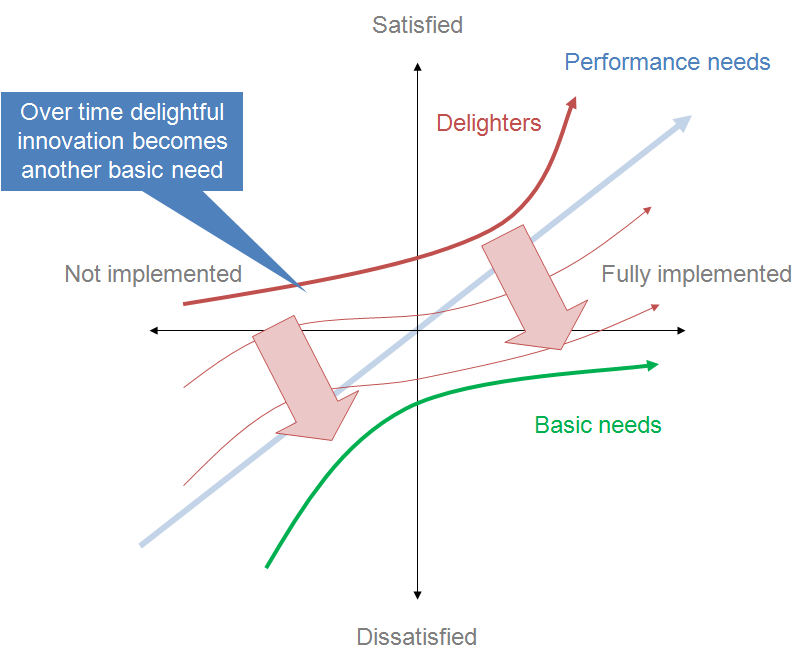
The Kano model is a theory of product development and customer satisfaction. It was developed by Japanese researcher Noriaki Kano in the 1980s. The model helps businesses understand and prioritize which features of their product or service will most effectively satisfy and delight customers.
The Kano model categorizes product features into three groups:
Must-have or basic features
Performance features
Delight features
The must-have features are the basic features that customers expect a product or service to have to meet their minimum requirements. If these basic features are not present, customers will be dissatisfied. For example, a smartphone must have a functioning touchscreen and the ability to make phone calls.
Performance features are features that are important to customers and can increase customer satisfaction, but their absence won’t necessarily lead to dissatisfaction. For example, a smartphone that has a long battery life or a high-quality camera.
Delight features are unexpected features that can create a positive emotional response from customers. These features can set a product or service apart from competitors and can create loyal customers. For example, a smartphone that has a built-in projector or has a unique design.
In summary, the Kano model helps businesses to understand what features of their product or service are most important to customers and how to prioritize their development efforts. By focusing on delight features, businesses can create a unique selling point and increase customer loyalty.




 Gökrem Tekir Blog Sayfası