
Understanding and Managing Your Product Backlog

Photo by Anastasia Shuraeva on Pexels.com

Section 1: Overview of the Product Backlog

The Product Backlog is an essential tool for Agile software development teams. It is an ordered list of items that represent the features, enhancements, and fixes that the team plans to work on. The Product Backlog consists of Product Backlog Items (PBIs), which are organized based on their priority and level of detail.

PBIs are classified into four types: Themes, Epics, User Stories, and Tasks. Themes are long-term goals or high-level business objectives. Epics are substantial PBIs that need to be broken down into smaller user stories. User Stories are single, meaningful PBIs that can be completed within a sprint. Tasks are the specific tasks required to achieve a user story.

Section 2: Building Your Product Vision and Product Goal

The Product Vision describes the desired future state or result of a product. It sets a clear objective for the development team and stakeholders, guiding their actions and choices throughout the product development journey. The Product Goal represents a target for the Scrum Team to align their planning efforts. It encapsulates the long-term objective that the Scrum Team aims to achieve, emphasizing the need to complete or abandon one objective before pursuing the next.

Section 3: Creating Product Backlog Items (PBIs)

To create good PBIs, you can follow the INVEST acronym, which outlines key characteristics of well-formed and effective user stories. PBIs should be independent, negotiable, valuable, estimable, small, and testable. Each PBI should be self-contained and able to be worked on and delivered separately from other PBIs. PBIs should be open to discussion and collaboration between the development team and stakeholders. Each PBI should deliver value to the customer or end-user. PBIs should be able to be estimated in terms of effort or complexity. PBIs should be small enough to be completed within a single sprint or iteration. Each PBI should have clear acceptance criteria that can be used to verify its successful completion.

Section 4: Checking the Quality of PBIs

The 3C Model provides a framework for creating and refining PBIs. It emphasizes three key aspects: Card, Conversation, and Confirmation. The PBI is represented by a physical or virtual card that captures the essential information about the item. The card serves as a catalyst for a conversation between the development team and the stakeholders, discussing implementation details and clarifying any questions or concerns. The confirmation step involves defining specific acceptance criteria or tests that must be met for the PBI to be considered complete.

Section 5: Balancing the Product Backlog Prioritization

The product backlog prioritization quadrants offer a useful tool for managing and prioritizing the items in a product backlog. The quadrants help the Product Owner and the team strike a balance between different types of backlog items and make informed decisions about their sequencing. The quadrants divide the backlog into four quadrants: new features, architectural innovation, support, and technical debt.

Section 6: Managing the Quality of Product Backlog

The DEEP acronym provides guidance for managing the Product Backlog in Agile software development. The items at the top of the Product Backlog should be detailed enough to provide a clear understanding of what needs to be done. The Product Backlog is not fixed or set in stone and should evolve and emerge as new information and insights become available. Each item in the Product Backlog should have a relative estimation of its effort or complexity. The Product Backlog should be prioritized based on the value and importance of the items.

Section 7: Product Backlog Refinement

Product Backlog Refinement is the process of breaking down and further defining Product Backlog items into smaller, more precise items. It is an ongoing activity to add details, such as a description, order, and size. Refinement sessions should occur at least once per Sprint to ensure the Product Backlog remains current and actionable. The Product Owner, Scrum Master, and Developers can initiate refinement sessions whenever necessary to maintain the Product Backlog’s quality and ensure a shared understanding of the upcoming work.


Pair Comparison

Photo by Pixabay on Pexels.com

Pair comparison is a powerful technique used in Agile methodology to compare two items or options and determine their relative importance or value. It is a useful tool for decision making and prioritizing tasks in Agile projects, enabling teams to make informed decisions and deliver high-quality deliverables. Pair comparison can be used in various situations such as deciding which feature to implement first, which user story is more important, or which task should be prioritized in a sprint.

In pair comparison, two items are compared against each other and rated based on their differences. The items can be user stories, features, tasks, or any other deliverables in an Agile project. The team members involved in the comparison assign scores or points to each item based on their perceived importance. Scores can be assigned on a numerical scale, such as 1 to 10, or a relative scale such as high, medium, or low.

The scores are then tallied, and the item with the highest score is given a higher priority. Through this process, teams can identify the most important items and prioritize them accordingly, ensuring that the most valuable work is completed first.

Pair comparison helps to avoid subjective decisions that can be influenced by biases or personal opinions. Instead, it allows teams to base their decisions on objective criteria, such as the value of the work to the project, its impact on stakeholders, or its alignment with project goals. This ensures that the prioritization process is fair and transparent, and everyone involved has a clear understanding of how decisions are made.

Pair comparison also helps to reduce the risk of decision paralysis, where teams struggle to make decisions due to a lack of clarity or consensus. By breaking down decisions into smaller, more manageable pairs, teams can more easily compare and contrast options, leading to faster and more effective decision making.

For example, let’s say a team has five user stories that they need to prioritize. The first step would be to compare the first user story against the second user story and assign a score based on which one is more important. Then, the team would compare the first user story against the third user story, and so on, until all pairs have been compared.

After comparing all pairs, the team can tally the scores and identify the user story with the highest score, which would be given the highest priority. They can then repeat this process to identify the next most important user story and so on until all user stories are prioritized.

Pair comparison is a powerful technique for prioritizing requirements because it helps to avoid subjective decisions that can be influenced by biases or personal opinions. Instead, it allows teams to base their decisions on objective criteria, such as the value of the requirement to the project, its impact on stakeholders, or its alignment with project goals. This ensures that the prioritization process is fair and transparent, and everyone involved has a clear understanding of how decisions are made.

Overall, pair comparison is a simple yet effective technique that helps Agile teams to prioritize work and make informed decisions. By using this technique, teams can ensure that they are delivering the most valuable work, improving project outcomes, and meeting stakeholder expectations.


Product Owner’s Expertise

Dr. Jason Dworkin, Project Scientist by NASA Goddard Photo and Video is licensed under CC-BY 2.0

A product owner plays a critical role in ensuring that a project meets the needs of the customers and stakeholders. They are responsible for translating the customer’s needs into actionable tasks for the development team. In addition to this, the product owner must also ensure that the project stays within budget and meets the deadline.

While some may wonder whether having expertise in the subject matter of the project is necessary for the product owner, the answer is no. In fact, having someone too close to the subject matter can hinder the project’s progress. This is because they may get too invested in the details and lose sight of the bigger picture. However, it is still important for the product owner to have a basic understanding of the subject matter to communicate effectively with the team members and stakeholders.

On the other hand, a product owner who maintains a high-level view of the project can ensure that it meets the needs of the stakeholders. They also have the necessary communication skills to interact effectively with the team members and stakeholders. This includes the ability to listen actively, ask questions, and provide constructive feedback.

It is essential for the product owner to prioritize requirements effectively, which means they must have a deep understanding of the product vision. They should be able to identify the most critical requirements, allocate resources accordingly, and set achievable goals. In addition to this, the product owner should also be able to identify potential risks and develop contingency plans to mitigate them.

In conclusion, while subject matter expertise can come in handy, having a product owner who is too close to the subject matter can be a hindrance. Instead, a product owner should have strong communication skills, be able to prioritize effectively, and maintain a high-level view of the project. This will ensure that the project meets the needs of the customers and stakeholders and stays within budget and timeline.


Lead Time vs. Cycle Time

Lead Time on Agile Approach

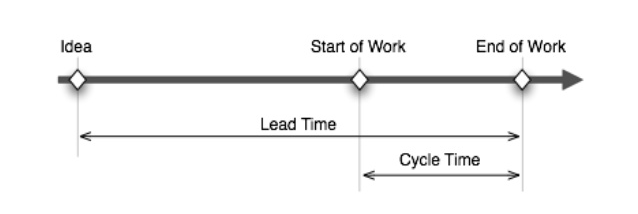
Lead time in Agile approach is the duration between the initiation of a project and the delivery of the final product. In the Agile methodology, the focus is on delivering a high-quality product in the shortest possible time. Therefore, reducing the lead time is a crucial aspect of Agile development.

The lead time can vary depending on the complexity of the project, the size of the team, and the availability of resources. However, in general, Agile teams aim to deliver the product in small increments, with each increment adding value to the final product.

To reduce lead time, Agile teams follow several practices, including continuous integration and delivery, test-driven development, and frequent collaboration with stakeholders. These practices help identify and resolve issues early in the development process, ensuring that the final product meets the customer’s requirements.

In conclusion, lead time is a critical factor in Agile development, and Agile teams strive to reduce it by delivering the product in small increments, following best practices, and collaborating with stakeholders.

Cycle Time on Agile Approach

Cycle time in Agile approach is the duration between the start and completion of a single task or user story. It is the time taken to deliver value to the customer. Agile teams aim to reduce cycle time by breaking down tasks into smaller, more manageable pieces and delivering them incrementally. By doing so, they can identify and address issues early in the development process, ensuring that the final product meets the customer’s requirements.