Agile methodology may not be suitable for projects with many task dependencies. Agile teams work in an iterative manner and focus on delivering value quickly and continuously. However, if there are many dependencies that must be resolved before work can proceed, this can slow down the team’s ability to deliver value quickly. In such cases, other project management methodologies may be more appropriate.
For example, waiting for a lead time of a product can have negative impacts on the agile team’s ability to deliver value in a timely manner.
If an agile team waits for a lead time of a product, it can lead to several consequences. Firstly, it can cause delays in the delivery of the product, as the team is dependent on the lead time of the product before they can proceed with their work. This can lead to missed deadlines and unhappy customers.
Secondly, waiting for a lead time of a product can disrupt the flow of the team’s work. Agile teams work in short iterations, with a focus on delivering value quickly and continuously. Waiting for a lead time of a product goes against this principle and can cause the team to lose momentum and motivation.
Lastly, waiting for a lead time of a product can lead to a lack of transparency and communication between the team and stakeholders. The team may not be aware of the status of the product, which can lead to misunderstandings and miscommunication.
Scrum ceremonies are an integral part of the Scrum framework, which is widely used in Agile software development. They are designed to facilitate communication and collaboration among team members, and ensure that everyone is aligned with the project goals.
However, some people may argue that these ceremonies are a waste of time, as they can be seen as unnecessary interruptions to the actual work that needs to be done. They may feel that these meetings take away from the time that could be spent on actual development work, and that the time spent on these ceremonies is not productive.
Despite these concerns, it is important to note that Scrum ceremonies serve a crucial purpose in Agile development. They provide a structured framework for communication and collaboration, which is essential for the success of any project. By ensuring that everyone is on the same page, and that any issues or concerns are addressed in a timely manner, Scrum ceremonies can help to prevent misunderstandings and delays.
In addition, Scrum ceremonies can actually save time in the long run. By catching problems early on, and addressing them in a timely manner, teams can avoid costly rework and delays down the road. By ensuring that everyone is aligned and working towards the same goals, Scrum ceremonies can help to keep everyone accountable and focused on the tasks at hand.
Overall, while some people may view Scrum ceremonies as a waste of time, it is important to recognize the value that they bring to Agile development. By providing a structured framework for communication and collaboration, these ceremonies can help to ensure the success of any project.
At the core of every successful agile project lies a well-defined product backlog. This list includes all the items that need to be delivered as a part of the solution, and it is typically made up of features, requirements, or user stories. These items are ranked in order of importance to the customer or the business. Think of it like a shopping catalog, where you circle the things you want, but not everything is guaranteed to be delivered.
The product backlog can be stored in a variety of formats, such as a spreadsheet, a requirements management tool, or even a physical list. What’s important is that it’s consistently maintained and adjusted as needed. A well-defined product backlog ensures a smooth flow of work and helps to prioritize tasks in order of business value. It also helps to eliminate unnecessary work by identifying items that are no longer required.
To ensure that your product backlog is well-defined, keep in mind the acronym SMART:
Specific
Each item on the product backlog should be specific and clear, outlining what needs to be accomplished and why it’s important. For example, instead of listing “Improve website usability,” you might list “Reduce the number of steps required to complete a purchase on the website from 5 to 3.” The more specific your item is, the easier it is to determine its relevance and priority.
Measurable
In order to track progress and prioritize work, each item on the backlog should be measurable. This means that you should be able to quantify the work required and estimate how long it will take to complete. For example, you might estimate that reducing the number of steps to complete a purchase will take 2 weeks of development time. By estimating the time required for each item, you can accurately predict the completion date and make more informed decisions.
Achievable
While it’s important to dream big, each item on the backlog should also be achievable within the constraints of your team and resources. Make sure that each item is realistic and can be accomplished with the time and resources you have available. Setting unrealistic goals can lead to frustration and ultimately, project failure.
Relevant
Only items that are relevant to the project’s goals and objectives should be included in the product backlog. This means that each item should be tied to a specific business need or customer problem that needs to be addressed. By keeping the backlog relevant, you can ensure that your team is working on tasks that are aligned with the project’s goals.
Time-bound
Finally, each item on the product backlog should be time-bound and have a clear deadline or target completion date. For example, you might set a goal to complete the website purchase improvement project within the next 3 months. By setting clear deadlines, you can motivate your team and ensure that each item is completed in a timely manner.
By following these guidelines and creating a SMART product backlog, you’ll be well on your way to delivering a successful project. Remember, a well-defined product backlog is an essential part of any successful project, and it ensures that your team is working on tasks that are aligned with your project’s goals and objectives.
Have you ever found yourself lost in a labyrinth of folders and documents, trying to find the information you need? This can be a frustrating experience, especially when different people organize data in different ways.
To address this issue, organizations are simplifying how people access tools, processes, templates, and samples. One of the most effective ways to do this is by using interactive visuals that allow users to drill down into specific information.
Interactive visuals are graphic representations that present complex data in an intuitive and user-friendly way. They can take many forms, such as clickable diagrams, workflows, swim-lane diagrams, infographics, and more.
For example, a website might feature a clickable diagram that starts at a high level and allows users to explore more detailed information by clicking on different parts of the diagram. The diagram could be color-coded to represent different categories, such as product types or business functions. Clicking on a certain segment of the diagram would reveal more detailed information related to that category.
Similarly, a workflow or swim-lane diagram can show the steps involved in a process, including who creates the document, who reviews it, who approves it, and any hurdles the process has to overcome. This type of visual is particularly useful for showing the flow of information and tasks among different stakeholders in a process.
Interactive visuals like these can be used in a variety of situations, not just for organizing information. For example, an online training course could use interactive visuals to guide learners through the material. Or a sales presentation could use interactive visuals to showcase different products and services.
Overall, interactive visuals are a powerful tool for conveying detailed information in a way that is easy for users to understand and interact with. They allow users to move from a broad overview of information to a more granular view, making it easy to find what they need. So the next time you’re struggling to navigate a complex folder structure or overwhelming amount of information, consider using interactive visuals to simplify the process.
Project management methodologies are important tools for achieving successful project outcomes. They provide a framework for managing and completing a project successfully. However, it is important to remember that they are simply tools and not goals in and of themselves. Different methodologies have different strengths and weaknesses, and it is important to be knowledgeable about them in order to select the one that best suits your team’s needs.
Being a fan of a specific methodology can be detrimental to the success of a project. A project manager must not become overly attached or “fanatical” about any one particular methodology. Rather, they should be knowledgeable about different methodologies and use the approach that is best suited for the current phase of the project.
To ensure the success of a project, a project manager must be flexible and adaptable to the changing needs of the project. This means that they should be able to recognize when a particular methodology is no longer effective and be willing to switch to a different approach that better suits the project’s current phase.
Flexibility and adaptability are key skills that a project manager must possess. Project management is an ever-evolving field, and what works well today may not work as well tomorrow. Therefore, a project manager should always be knowledgeable about different methodologies and use the approach that is best suited for the current phase of the project.
It is important to keep in mind that your boss will mainly be interested in the results of your project, rather than the specific methodology you used to achieve them. The project’s success is what matters most, and the methodology used to achieve that success should be viewed as a tool, not a goal in and of itself.
In summary, project management methodologies are important tools for achieving successful project outcomes, but they should not be viewed as the end goal. By remaining flexible and adaptable, and focusing on delivering high-quality results, you can ensure that your projects are successful, regardless of the methodology you use. A project manager must possess key skills such as flexibility and adaptability to ensure that they are using the approach that is best suited for the current phase of the project.
Being a good instructor requires a combination of various skills, including knowledge, experience, and communication skills. However, one of the most critical elements that can make a significant difference in the teaching process is the ability to listen actively. Listening is a fundamental aspect of communication that is often overlooked, but it is a skill that can be developed and refined. It is not only about hearing what the students are saying, but also understanding their needs, concerns, and expectations. When an instructor listens attentively, it creates an environment of trust and respect that promotes effective learning.
To become a good listener, an instructor should pay attention to the following:
Be Present
Being present is a crucial aspect of active listening. An instructor should be fully present and engaged in the conversation with the students. It means being physically and mentally present, avoiding distractions, and giving undivided attention to what the students are saying. When an instructor is present, they can pick up on the nuances of the conversation, such as tone and body language, which can provide valuable insights into the students’ thoughts and feelings.
Ask Questions
Asking questions is an effective way to show interest in the students’ thoughts and ideas. It also helps to clarify any misunderstandings and encourages students to express themselves more freely. By asking open-ended questions that require more than a simple “yes” or “no” answer, instructors can encourage students to think critically and share their opinions. Additionally, asking follow-up questions can help instructors gain a deeper understanding of the students’ perspectives and needs.
Empathize
Empathy is the ability to put oneself in someone else’s shoes and understand their perspective. It is an essential component of active listening as it helps the instructor to understand the students’ needs and provide appropriate support. When instructors empathize with their students, they can provide personalized support that meets the students’ individual needs. Additionally, empathy can help instructors build rapport with their students, which can enhance the overall learning experience.
Provide Feedback
Providing feedback is an essential part of the learning process. An instructor should give constructive feedback that encourages students to improve their skills and knowledge. Feedback should be specific, timely, and relevant to the students’ goals. When instructors provide feedback, they should focus on the students’ strengths and weaknesses and provide actionable steps to improve. Additionally, instructors should encourage students to reflect on their work and provide opportunities for self-assessment.
In conclusion, listening is a critical skill that every instructor should master to become effective in teaching. It helps to create a positive learning environment, builds trust and respect, and enhances the overall learning experience for the students. By being present, asking questions, empathizing, and providing feedback, an instructor can develop their listening skills and become a better teacher. By mastering the art of active listening, instructors can create meaningful connections with their students, inspire them to learn, and empower them to achieve their goals.
In today’s fast-paced business world, it can be tempting to skip the planning process altogether, especially in an Agile environment where change is constant and the future is unpredictable. However, planning is still an essential part of any successful project. It provides a baseline for future discussions, allows for stakeholder input, and helps balance the portfolio of projects.
When creating a roadmap, the team should understand that change is not only possible, but necessary. Any new change should make the plan better, whether that means adding higher priority items, dropping lower ones out, making the plan more achievable or less risky, or better aligning schedules and dependencies. The original plan sets a baseline for future evaluations and discussions. Without a starting point, it’s impossible to know if a suggested change is a good one or not. Having a baseline plan makes it easier to make value comparisons and have healthy discussions.
Another use of a baseline plan is as a communication vehicle to talk about the roadmap with stakeholders. It allows stakeholders to ask their questions at the beginning and see if they can exert influence while there is still time to do so. Being able to start a conversation by recognizing the plan is only a draft invites input and changes at a time when changes are less expensive than later in the process. Using the baseline as a mechanism to have these discussions will be a lot easier than going to each stakeholder group with a blank canvas and attempting to fill it in with each one.
Part of the job of a program or portfolio manager is to create a balanced plan; a portfolio of projects that supports the organizational strategy. To see if a plan has balance, looking at the whole plan is required. Even if each project is solid on its own, it may not be true for the entire collection of projects. Creating a baseline portfolio allows for changes based on the entire plan, not just a single project.
For instance, assume that a portfolio contains ten projects. While all ten of them may anticipate good ROI, or all seem to have solid business cases behind them, it could very well be that isn’t true for the entire collection of projects. For example, while each of the projects are good, few of them have the chance to be spectacular, and none of them have the chance of truly outsized results. This may cause a program manager to make a change to the portfolio, adding in a more speculative and riskier project, and taking out one that has a higher chance of succeeding, but a lower ceiling if it does. On a one-for-one basis, this tradeoff might not make sense, but using a portfolio view, it can be wise. Remember that the goal doesn’t hinge on the outcome of one project, but instead on the collection of all of them.
Planning is still an essential part of any successful project or program, even in an Agile environment. It provides a baseline for future discussions, allows for stakeholder input, and helps balance the portfolio of projects. Skipping the planning process can lead to directionless execution or an inability to correct course mid-stream. Having a plan in place, even a flexible one, is essential for success in today’s business world.
Calculating the cost of a sprint can be a complex task. However, by considering the following factors, we can get a better understanding of how much it will cost to complete a project:
Team size: The number of people working on the sprint will affect the cost. More team members mean higher cost. This is because each team member will require expenditure, and more people working on a project means more expenditure.
Team member rates: Each team member has a different hourly rate, depending on their role and experience level. For instance, a senior developer with years of experience will likely have a higher hourly rate than a junior developer. Therefore, it is important to account for these differences when calculating the cost of a sprint.
Duration of the sprint: The longer the sprint, the higher the cost. This is because more hours will be required to complete the project. Additionally, there may be additional costs associated with a longer sprint, such as increased overhead costs.
Overhead costs: These include expenses such as equipment, software licenses, office space, and utilities. These costs can add up quickly, especially for larger projects. Therefore, it is important to account for these costs when calculating the overall cost of a sprint.
Once we have all of the above information, we can calculate the cost of the sprint by multiplying the total number of hours worked by the team by the hourly rate of each team member. We then add any overhead costs to get the total cost of the sprint.
It is important to keep track of these costs and adjust them, if necessary, to ensure that the project stays within budget. By regularly monitoring the cost of a sprint, we can make informed decisions about how to allocate resources and keep the project on track.
In Scrum, the story point values are typically used to estimate the relative effort required to complete a task, rather than the actual cost in dollars or other currency. However, if the team has a good understanding of the relationship between story points and cost, they may be able to use story points as a proxy for cost when planning and budgeting for a project. This can be especially useful when working on an agile project where requirements are likely to change frequently, as it allows the team to adjust their budget and resources more easily as the project progresses.
How Can We Calculate Project Cost?
In an Agile project, it can be difficult to calculate the cost of a story point directly. However, by tracking the team’s velocity (i.e., the number of story points completed per sprint), we can estimate the team’s average rate of progress.
To calculate the cost of a story point, we need to know the average cost of a sprint. We can estimate this cost by dividing the total cost of a sprint by the number of story points completed in that sprint.
For example, if a sprint costs $10,000 and the team completes 50 story points, the cost per story point is $200 ($10,000 / 50).
Once we have an estimate of the cost per story point, we can use this information to plan and budget for future sprints. By estimating the number of story points required for each feature or user story, we can calculate the approximate cost of implementing that feature or story.
It’s important to note that this method is an estimate, and the actual cost of a story point may vary depending on a variety of factors such as team size, team member rates, and overhead costs. However, by tracking velocity and using historical data to estimate costs, we can make more informed decisions about how to allocate resources and plan for future sprints.
In project management, the critical path is the longest sequence of tasks that must be completed on time to ensure that the project is finished within the scheduled time frame. The critical path method (CPM) is a project management technique that helps identify the most critical tasks in a project and determines the shortest possible time to complete it. The CPM has been around for more than half a century and is still one of the most popular project management techniques today.
Despite the emergence of alternative approaches, such as agile and lean methodologies, critical path analysis remains a fundamental tool for managing complex projects. Some people argue that the critical path method is outdated and no longer relevant in today’s fast-paced business environment. They argue that it is too rigid and inflexible, and that it does not allow for changes or adjustments to be made during the project. However, this is a misconception.
The critical path method is not rigid or inflexible. It is a tool that can be adapted to fit any project, regardless of its complexity or size. When used correctly, the CPM provides a clear understanding of the interdependencies between tasks in a project. It helps identify potential bottlenecks and areas where resources may need to be allocated differently. This level of insight is essential for managing complex projects and ensuring that they are completed on time and within budget.
Moreover, the critical path method is not limited to large-scale projects. It can be used in any project, regardless of size. Even small projects with a limited number of tasks can benefit from the CPM. By identifying the critical path, project managers can determine the most important tasks and allocate resources accordingly.
The critical path method is also valuable for risk management. By identifying the critical path, project managers can determine the tasks that are most critical to the project’s success. They can then focus their attention on these tasks and ensure that they are completed on time. This approach minimizes the risk of delays and ensures that the project is completed within the scheduled time frame.
In conclusion, the critical path method is not dead. It is alive and well in our projects. It remains an essential tool for project managers who want to ensure that their projects are completed on time and within budget. While alternative approaches may have emerged in recent years, the critical path method is still the most effective way to manage complex projects. Its adaptability, flexibility, and focus on risk management make it an invaluable tool for any project manager.
A servant leader is a person who serves the team members and helps them to achieve their goals. In Scrum approach, a servant leader plays a crucial role in facilitating the Scrum process and ensuring that the team is functioning effectively.
The servant leader serves the team in several ways in Scrum. Firstly, the servant leader helps the team to understand the Scrum framework and provides guidance on how to implement it effectively. This involves educating the team members on the principles and values of Scrum, and how they can apply them to their work. They work closely with the Scrum Master to ensure that the team is following the Scrum process and that any issues are resolved quickly. The servant leader also helps the team to define their goals and objectives, and how they can align them with the project’s vision.
Secondly, the servant leader fosters a collaborative environment where team members can work together effectively. They encourage open communication, trust, and respect among team members. The servant leader also helps to identify and remove any obstacles that may be hindering the team’s progress. They facilitate meetings and discussions to ensure that everyone’s ideas and opinions are heard and considered. By creating an environment where team members feel safe to share their thoughts, the servant leader can unlock the team’s full potential.
Thirdly, the servant leader supports the team by providing them with the necessary resources and tools to complete their work. They ensure that the team has access to the right technology, training, and support to deliver high-quality work. The servant leader also helps the team to manage their workload and balance their priorities. They provide feedback and coaching to team members to help them improve their skills and become more productive.
In conclusion, a servant leader serves the team in Scrum by providing guidance, fostering a collaborative environment, and supporting the team with the necessary resources and tools. By doing so, they help the team to work together effectively and achieve their goals. The servant leader is a crucial member of the Scrum team, and their role is essential for the success of the project.
Does a Servant Leader help Personal Lives
A servant leader’s primary responsibility is to serve the team by facilitating the Scrum process and ensuring that the team is functioning effectively. Although a servant leader may be supportive of team members’ personal lives, their primary focus is on the project and the team’s work.
That being said, a servant leader may still be able to support team members outside of their project work, depending on the specific circumstances. For instance, suppose there are two young people on the Scrum team who need to find a house to live in after their wedding. In this case, it may not be expected for the servant leader to directly assist them in their house renting process.
However, the servant leader can still support team members by helping them manage their workload effectively. By doing so, team members can have more time to search for a house outside of work hours. The servant leader can also suggest ways for team members to prioritize their tasks so that they can balance their personal and professional lives more effectively.
Furthermore, if team members’ personal situations are affecting their work, the servant leader can work with the Scrum Master to find a solution that benefits both the team and the project. For example, the servant leader can suggest a temporary adjustment to the team’s work schedule so that team members have more time to search for a house. Alternatively, the servant leader can help team members delegate some of their work to other team members so that they can focus on finding a house.
What does a servant leader do in a day?
A servant leader’s day-to-day activities are highly dependent on the needs of the team and the project. One of their key responsibilities is to meet with team members individually to provide guidance and support. This includes listening to their concerns, answering their questions, and providing them with the resources they need to succeed. Additionally, a servant leader will often facilitate meetings and discussions among team members to ensure that everyone is on the same page and that progress is being made.
Furthermore, a servant leader will help to remove any obstacles that may be hindering the team’s progress. This could involve identifying a lack of resources, clarifying ambiguous requirements, or resolving conflicts between team members. They will also work closely with the Scrum Master to ensure that the team is following the Scrum process and that any issues are resolved quickly.
Another key aspect of a servant leader’s role is providing feedback and coaching to team members. This includes providing constructive criticism and helping team members identify areas for improvement. They will also work with team members to develop skills and competencies that will help them become more productive and effective. Ultimately, a servant leader’s goal is to serve the team by helping them to achieve their goals and work together effectively, while also fostering an environment of continuous learning and improvement.
When a team member is not performing well, it can have a significant negative impact on the overall performance of the team. In Scrum, it is essential to address poor performance as soon as possible to ensure that the team can meet its goals and deliver value to the customer.
Managing the poor performance of a team member in Scrum involves a series of steps that are designed to help the team member improve their performance while ensuring that the team can continue to meet its objectives. Here are the steps that can be taken to manage poor performance of a team member in Scrum:
Identify the problem: The first step is to identify the problem. This can be done by analyzing the team’s performance data, observing the team member’s behavior, and getting feedback from other team members. It is essential to understand the root cause of the poor performance to determine the most effective way to address it.
Communicate with the team member: Once the problem has been identified, it is important to communicate with the team member. This can be done through a one-on-one meeting or a team meeting. During the meeting, it is important to clearly explain the concerns about their performance and its impact on the team’s overall performance. It is also essential to listen to the team member’s perspective and understand their challenges, concerns, and feedback.
Set expectations: During the meeting, it is important to set clear expectations for the team member. This includes outlining what is expected of them in terms of their role, responsibilities, and performance. The expectations should be specific, measurable, achievable, relevant, and time-bound (SMART).
Provide support: It is important to provide support to the team member to help them improve their performance. This can include providing training, coaching, or mentoring. The support should be tailored to the team member’s specific needs and should be designed to help them address the root cause of their poor performance.
Monitor progress: After setting expectations and providing support, it is important to monitor the team member’s progress. This can be done through regular check-ins, performance reviews, and feedback from other team members. The monitoring should be ongoing and should be designed to help the team member stay on track and make progress towards meeting the expectations that have been set.
Take action if necessary: If the team member’s performance does not improve despite the support provided, it may be necessary to take further action. This can include reassigning tasks, providing more training, or, in extreme cases, removing the team member from the team. It is important to take action in a timely and respectful manner, and to communicate clearly with the team member about the reasons for the action and the implications for the team.
By following these steps, the poor performance of a team member can be effectively managed in Scrum, ensuring that the team can meet its goals and deliver value to the customer. Managing poor performance is an ongoing process, and it requires a continuous focus on improvement and a commitment to helping team members reach their full potential.
Agile methodology is a popular approach used in software development, which involves iterative and incremental development. It emphasizes on delivering the highest business value in the shortest amount of time.
Two popular charts used in agile methodology are Burn-Down and Burn-Up charts. These charts are essential tools that help teams visualize the progress of their work across iterations or sprints.
Burn-Down charts track the amount of work that remains to be done versus the time remaining. The chart shows a downward trendline, which represents the amount of work remaining. This chart is useful in identifying the team’s progress and helps the team to stay on track with their goals. It also helps the team to identify any potential issues that may arise during the project.
On the other hand, Burn-Up charts track the amount of work that has been completed versus the time remaining. The chart shows an upward trendline, which represents the amount of work completed. This chart is useful in showing the team’s progress and helps to identify whether they are on track to meet their goals. It also helps to demonstrate to stakeholders how much progress has been made and how much work remains.
In summary, the main differences between Burn-Down and Burn-Up charts are the direction of the trend lines. Burn-Down charts show the amount of work remaining, while Burn-Up charts show the amount of work completed. Both charts are useful in tracking progress and providing visibility to the team and stakeholders.
Overall, the use of these charts is an important aspect of agile methodology, as they provide teams with a way to track their progress, identify potential issues, and communicate effectively with stakeholders. By using these charts, teams can stay on track with their goals and ensure that they are delivering the highest business value in the shortest amount of time.
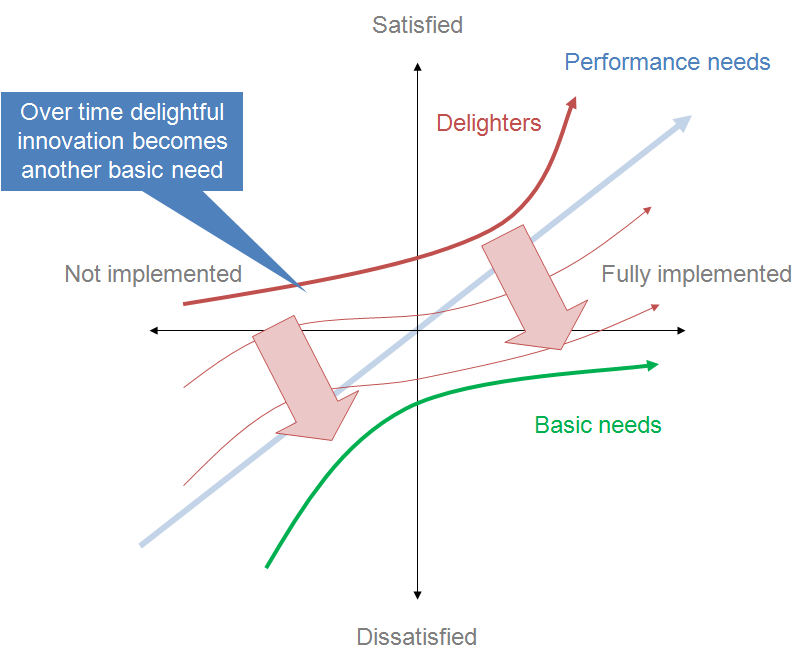
The Kano model is a theory of product development and customer satisfaction. It was developed by Japanese researcher Noriaki Kano in the 1980s. The model helps businesses understand and prioritize which features of their product or service will most effectively satisfy and delight customers.
The Kano model categorizes product features into three groups:
Must-have or basic features
Performance features
Delight features
The must-have features are the basic features that customers expect a product or service to have to meet their minimum requirements. If these basic features are not present, customers will be dissatisfied. For example, a smartphone must have a functioning touchscreen and the ability to make phone calls.
Performance features are features that are important to customers and can increase customer satisfaction, but their absence won’t necessarily lead to dissatisfaction. For example, a smartphone that has a long battery life or a high-quality camera.
Delight features are unexpected features that can create a positive emotional response from customers. These features can set a product or service apart from competitors and can create loyal customers. For example, a smartphone that has a built-in projector or has a unique design.
In summary, the Kano model helps businesses to understand what features of their product or service are most important to customers and how to prioritize their development efforts. By focusing on delight features, businesses can create a unique selling point and increase customer loyalty.
A product owner plays a critical role in ensuring that a project meets the needs of the customers and stakeholders. They are responsible for translating the customer’s needs into actionable tasks for the development team. In addition to this, the product owner must also ensure that the project stays within budget and meets the deadline.
While some may wonder whether having expertise in the subject matter of the project is necessary for the product owner, the answer is no. In fact, having someone too close to the subject matter can hinder the project’s progress. This is because they may get too invested in the details and lose sight of the bigger picture. However, it is still important for the product owner to have a basic understanding of the subject matter to communicate effectively with the team members and stakeholders.
On the other hand, a product owner who maintains a high-level view of the project can ensure that it meets the needs of the stakeholders. They also have the necessary communication skills to interact effectively with the team members and stakeholders. This includes the ability to listen actively, ask questions, and provide constructive feedback.
It is essential for the product owner to prioritize requirements effectively, which means they must have a deep understanding of the product vision. They should be able to identify the most critical requirements, allocate resources accordingly, and set achievable goals. In addition to this, the product owner should also be able to identify potential risks and develop contingency plans to mitigate them.
In conclusion, while subject matter expertise can come in handy, having a product owner who is too close to the subject matter can be a hindrance. Instead, a product owner should have strong communication skills, be able to prioritize effectively, and maintain a high-level view of the project. This will ensure that the project meets the needs of the customers and stakeholders and stays within budget and timeline.
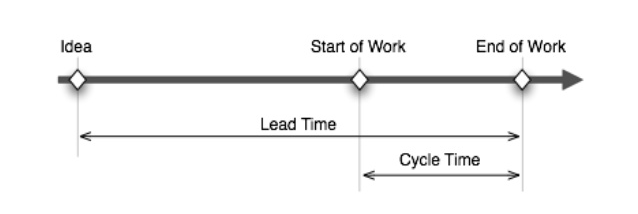
Lead time in Agile approach is the duration between the initiation of a project and the delivery of the final product. In the Agile methodology, the focus is on delivering a high-quality product in the shortest possible time. Therefore, reducing the lead time is a crucial aspect of Agile development.
The lead time can vary depending on the complexity of the project, the size of the team, and the availability of resources. However, in general, Agile teams aim to deliver the product in small increments, with each increment adding value to the final product.
To reduce lead time, Agile teams follow several practices, including continuous integration and delivery, test-driven development, and frequent collaboration with stakeholders. These practices help identify and resolve issues early in the development process, ensuring that the final product meets the customer’s requirements.
In conclusion, lead time is a critical factor in Agile development, and Agile teams strive to reduce it by delivering the product in small increments, following best practices, and collaborating with stakeholders.
Cycle Time on Agile Approach
Cycle time in Agile approach is the duration between the start and completion of a single task or user story. It is the time taken to deliver value to the customer. Agile teams aim to reduce cycle time by breaking down tasks into smaller, more manageable pieces and delivering them incrementally. By doing so, they can identify and address issues early in the development process, ensuring that the final product meets the customer’s requirements.