Author: Gökrem TEKİR, PMP
Gökrem Tekir graduated from Anadolu University in 1997 as an Industrial Engineer.
He worked as a project engineer in different companies in the production and service sector. He earned the PMP Certificate in 2004.
After receiving the PMP Certificate, he continued his career as a Project Management Trainer and Consultant.
Among the trainings he gave, there are topics such as Fundamentals of Project Management, Agile Project Management, Scrum Approach, Project Planning and Follow-up with Microsoft Project, PMP Exam Preparation.
The consultancy services offered by Gökrem Tekir are the Establishment and Integration of Project Management Offices, Microsoft Project Server and Sharepoint Integration, Development of Enterprise-Specific Project Management Methods, Planning and Reporting of Projects Between Buyer and Sellers, Creation and Follow-up of Project Plans of Institutions, Projects of Employees. It is listed as Adapting to Management Methods.
Gökrem Tekir is the author of the first Turkish-language Project Management book in 2006. In 2017, a much more comprehensive work titled "Our Life is the Project - Project Manager's Handbook" was also published.
Gökrem Tekir continues to share information on social networks such as Youtube, Linkedin, Twitter and Instagram in order to spread his knowledge on project management.
Gökrem Tekir continues his training and consultancy services within the body of Istanbul Kurumsal Gelisim Ltd. company.
Effective Resource Management Planning
Project Team Composition
Project Teams
PMP Question 7
What is the primary objective of cross-training within a project team, and how does it contribute to project success?
A) To mitigate the risk of a single point of failure by ensuring that multiple team members are proficient in critical aspects of the project. This fosters resilience and continuity in the face of challenges.
B) To create a competitive environment that motivates team members to enhance their performance, thereby driving overall project excellence.
C) To groom team members for future leadership roles within the organization, focusing on developing their managerial skills and strategic thinking abilities.
D) To comply with industry standards for quality assurance, as cross-training is recognized as a best practice for ensuring project efficiency and effectiveness.
Erişim elde etmek için abone olun
Buna benzer içerikleri daha fazla okumak için bugün abone olun.
PMP Question 6
Why is it crucial to diversify skill sets within a project team?
A) To maximize specialization in specific areas, ensuring a focused approach to project development.
B) To ensure project continuity by combining specialists and generalists, thereby enhancing adaptability and support.
C) To achieve uniform skill development across the team, simplifying training needs.
D) To optimize resource allocation and minimize the need for external hiring, leading to cost-effectiveness.
Erişim elde etmek için abone olun
Buna benzer içerikleri daha fazla okumak için bugün abone olun.
PMP Question 5
The project you’re managing involves collaboration between teams from two different companies with distinct corporate cultures. To unify the teams, you recognize the need to establish common team norms.
What approach do you take to establish effective team norms for this collaborative project?
A) Drafting a set of norms based on your company’s culture and enforcing them across the combined team to maintain consistency.
B) Holding a joint workshop where team members from both companies can contribute to the creation of shared norms, ensuring buy-in from all participants.
C) Allowing each company to follow its own set of norms to avoid conflict, relying on project milestones to keep the teams aligned.
D) Deciding that establishing team norms is too time-consuming and unnecessary, focusing instead on individual accountability for project deliverables.
When two distinct corporate cultures come together for a project, the potential for innovation is boundless. Yet, this fusion can also present challenges in alignment and collaboration. By engaging both teams in the creation of shared norms, we’re not just building a set of rules; we’re crafting a new, shared culture that honors the diversity of our combined team. This collaborative approach ensures buy-in from all members, creating a foundation of mutual respect and shared commitment. As we navigate this journey together, these norms become our compass, guiding us toward a successful collaboration that leverages the strengths of both companies.
Correct Answer: B
Reason: This inclusive approach ensures that norms reflect the combined team’s values and working styles, fostering unity and collaboration.
Incorrect Answers:
A) Imposing one company’s norms can create resistance and diminish the value of collaboration.
C) Allowing each company to follow its norms can lead to confusion and inefficiencies.
D) Neglecting to establish team norms overlooks the opportunity to create a cohesive team culture, potentially leading to misunderstandings and conflict.
PMP Question 3
Two team members have a disagreement over the best approach to a critical component of the project. Their conflict has begun to affect the morale of the entire team, and delays are imminent if a resolution is not found.
As the project manager, how do you facilitate conflict resolution between these team members?
A) Letting them resolve it on their own to foster independence, avoiding any managerial intervention that could stifle team dynamics.
B) Organizing a mediation session where both parties can present their viewpoints, followed by a discussion to find a mutually acceptable solution.
C) Deciding the outcome yourself based on your understanding of the project needs, to expedite resolution and minimize project delays.
D) Encouraging a team vote on the disputed approaches, going with the majority to ensure team cohesion and democratic decision-making.
Conflict within a team isn’t a roadblock; it’s an opportunity for growth and innovation. When two of our team members clash over a critical component, it’s a signal for us to pause and listen. By organizing a mediation session, we’re not just solving a dispute; we’re reinforcing our commitment to collaboration and mutual respect. This process allows us to uncover innovative solutions that might have been overlooked in a unilateral decision-making approach. As we navigate through these discussions, we strengthen our team’s bond and reaffirm our collective focus on the project’s goals.
Correct Answer: B
Reason: Mediation respects all perspectives and fosters a constructive resolution, maintaining team cohesion and productivity.
Incorrect Answers:
A) Allowing conflicts to resolve on their own can lead to unresolved issues and affect team dynamics negatively.
C) Unilateral decisions by the manager can disregard team input, leading to resentment or disengagement.
D) Voting on disputed approaches can create winners and losers, potentially harming team unity.
PMP Question 2
Halfway through the project, a significant client request necessitates a shift in project priorities. This change could impact the timeline and resource allocation. You schedule a meeting with key stakeholders and team leads to discuss the way forward.
In negotiating the shift in project priorities, what principle should guide your approach?
A) Insisting on the original plan to avoid setting a precedent for client-driven changes, maintaining project scope and deadlines.
B) Focusing solely on the additional revenue the change request brings, prioritizing any tasks that increase project budget.
C) Balancing the client’s needs with the project’s scope and resources, seeking a compromise that aligns with team capabilities and project goals.
D) Automatically accepting the client’s request, reallocating resources to new priorities without reviewing the impact on the project’s original goals.
As we face unexpected shifts in our project landscape, the art of negotiation becomes our most valuable tool. It’s not about saying ‘yes’ to every request or rigidly sticking to our original plan. Instead, it’s about finding that sweet spot where we can adjust our sails to accommodate new winds without losing direction. This approach ensures that we remain responsive to our client’s needs while safeguarding the project’s integrity and team morale. Through open dialogue and strategic compromise, we navigate these challenges, ensuring our project remains on a course for success.
Correct Answer: C
Reason: Effective negotiation involves finding a balance between various project constraints and opportunities, ensuring that changes are manageable and beneficial.
Incorrect Answers:
A) Insisting on the original plan without flexibility can lead to missed opportunities and client dissatisfaction.
B) Prioritizing changes solely based on additional revenue without considering project impact can derail the project.
D) Automatically accepting client requests without assessing impact can compromise project goals and team morale.
PMP Question 1
You’re leading a new project to develop an innovative software application. The team comprises members from different departments, each bringing unique skills and experiences. To ensure everyone is aligned from the outset, you decide to create a Team Charter.
What is the primary focus when drafting the Team Charter for your project team?
A) Listing the technical specifications of the software application to ensure all developers understand the project requirements.
B) Outlining each team member’s daily tasks for the first month to kickstart the project with clear direction.
C) Establishing shared values, communication guidelines, and conflict resolution methods to foster a collaborative team environment.
D) Documenting a detailed project timeline, including milestones and deadlines, to track project progress effectively.
In launching our software development project, we’re bringing together diverse talents and perspectives. The key to harmonizing these differences lies in our Team Charter. It’s not just a document; it’s a declaration of our collective commitment to openness, respect, and shared goals. By focusing on our values, how we communicate, and resolve disputes, we lay the groundwork for a project defined by collaboration and innovation. This process ensures that every voice is heard and every contribution valued, setting the stage for our project’s success.
Correct Answer: C
Reason: A Team Charter’s primary purpose is to align team members on the project’s foundational aspects, such as values, communication, and conflict resolution, ensuring everyone works cohesively.
Incorrect Answers:
A) Technical specifications are part of project documentation but not the focus of a Team Charter.
B) Daily task assignments are too granular for a Team Charter, which aims at broader team alignment.
D) A detailed project timeline is part of project planning documents, not the Team Charter, which focuses on team dynamics and collaboration.
Unveiling the Power of Disciplined Agile: A Meetup Invitation
Disciplined Agile (DA) is a framework that provides a pragmatic approach to agile and lean practices within the context of your enterprise. Unlike rigid, one-size-fits-all methodologies, Disciplined Agile recognizes that organizations are diverse and need flexible solutions to navigate the complexities of their unique environments. Developed by Scott W. Ambler and Mark Lines, Disciplined Agile incorporates a range of strategies from various agile and lean approaches, offering a comprehensive toolkit for agile practitioners. It addresses not only the software development lifecycle but also the broader spectrum of activities required for successful product delivery, including solution delivery, IT operations, and enterprise-level governance. The key strength of Disciplined Agile lies in its ability to guide organizations in tailoring their processes to suit their specific needs, fostering collaboration, and ultimately delivering value to their customers in the most efficient and effective way possible.
If you’re intrigued by the possibilities that Disciplined Agile holds for your organization, join us on 8th January at 19:00 CET for an insightful meetup. This is a unique opportunity to delve into the world of Disciplined Agile, connect with like-minded individuals, and gain valuable insights into implementing agile practices at scale. Whether you’re an agile practitioner, a project manager, or a business leader seeking to enhance your organization’s agility, this meetup promises to be a valuable forum for sharing experiences, asking questions, and exploring the transformative potential of Disciplined Agile. Don’t miss out on this chance to be part of a dynamic community dedicated to advancing agile practices and optimizing organizational performance. Mark your calendar and join us for an evening of learning, networking, and inspiration as we navigate the exciting terrain of Disciplined Agile together.
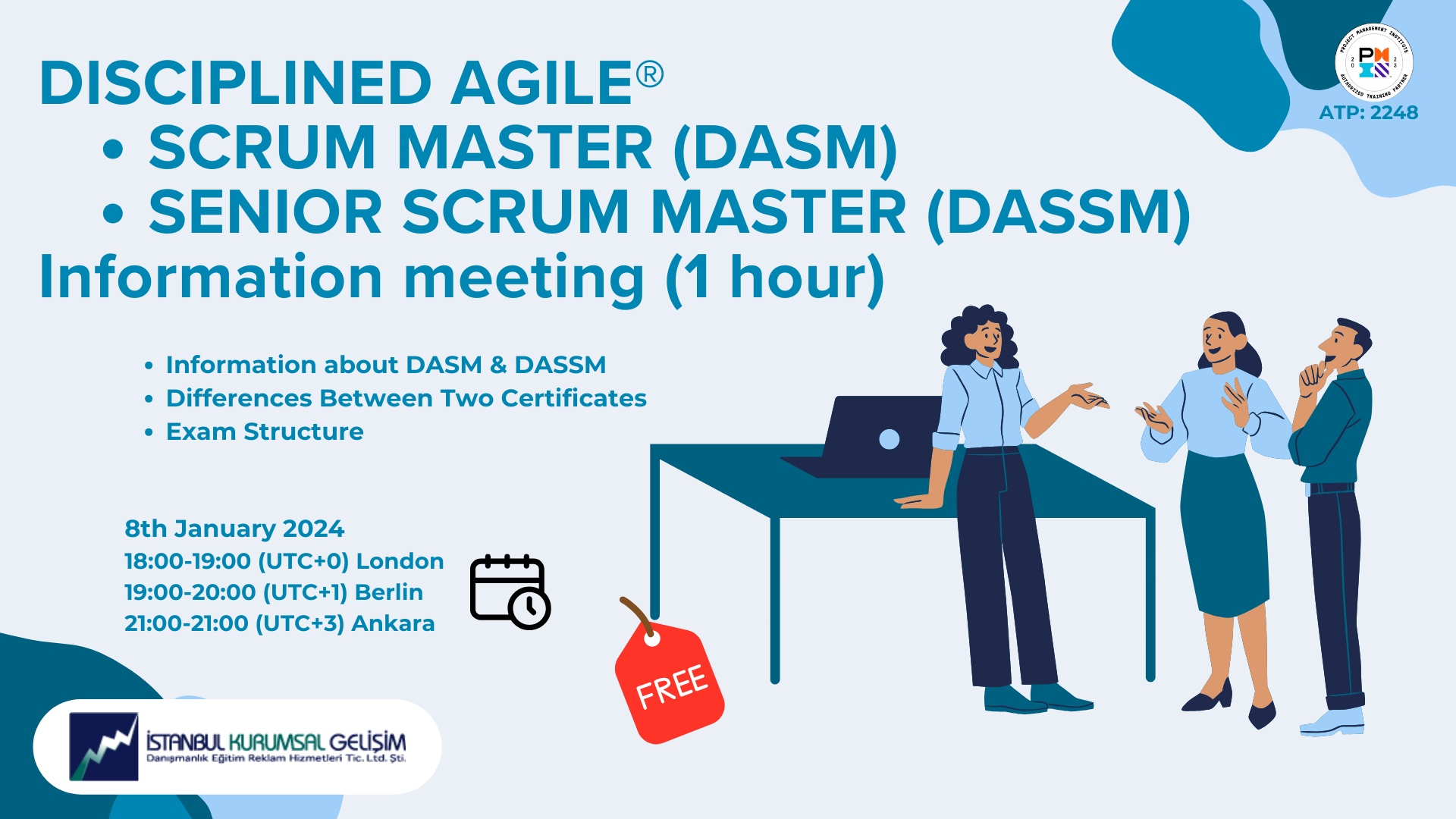
To register, follow the link please.
Analogous Estimating vs Bottom-Up Estimating

Analogous estimating and bottom-up estimating are two different techniques used in project management for estimating project costs and durations. Each method has its own advantages and disadvantages, and they are often used in different situations based on the available information and project requirements. Let’s explore each of these estimating techniques:
- Analogous Estimating:
- Definition: Analogous estimating, also known as top-down estimating, is a technique where the current project’s estimates are based on historical information from similar projects.
- Process: The estimator looks at the characteristics of past projects that are similar in scope, size, and complexity to the current project. The cost or duration of the current project is then estimated by adjusting the historical data based on known differences.
- Advantages:
- Quick and relatively simple.
- Requires less detailed information.
- Can provide a rough estimate early in the project life cycle.
- Disadvantages:
- Relies heavily on the accuracy and relevance of historical data.
- May not be accurate if there are significant differences between the current and past projects.
- Limited precision, as adjustments are often subjective.
- Bottom-Up Estimating:
- Definition: Bottom-up estimating, also known as detailed estimating, involves breaking down the project into smaller, more manageable parts and estimating the time and cost for each individual component.
- Process: Estimators create detailed estimates for the smallest work packages or activities, and then roll up these estimates to calculate the total project cost or duration. This approach involves a more granular analysis of the project components.
- Advantages:
- Provides a detailed and accurate estimate.
- Allows for a more precise budget and schedule.
- Facilitates better control and tracking of individual project components.
- Disadvantages:
- Can be time-consuming and resource-intensive.
- Requires a high level of detail and information about the project components.
- May not be suitable for early stages of the project when detailed information is lacking.
Choosing Between Analogous and Bottom-Up Estimating:
- Project Phase: Analogous estimating is often used in the early stages of a project when detailed information is limited, while bottom-up estimating is typically employed when more detailed information is available later in the project life cycle.
- Project Complexity: For simple projects with well-defined similarities to past projects, analogous estimating may be sufficient. For complex projects with diverse components, bottom-up estimating is often more accurate.
- Accuracy Requirements: If a high level of accuracy is required, especially for critical components of a project, bottom-up estimating is preferred.
In practice, a combination of both techniques may be used at different stages of a project to capitalize on their respective strengths.


Projelerde Yaşadıklarınızı Anlatmak İster misiniz?

Projelerinizde yaşadıklarınızı benimle paylaşmak ister misiniz?
İster bireysel, ister ekip olarak.
İsterseniz sadece siz anlatırsınız, ben dinlerim; İsterseniz tecrübelerime dayanarak fikrimi de söylerim.
- Ekibinizle iletişim kurmada sorunlar mı yaşıyorsunuz?
- Ekibinizin içindeki yaşanan iletişim sorunlarından şikayetçi misiniz?
- Çatışmaları yönetmede zorlanıyor munusunuz?
- Liderlik vasıflarınızın eksik olduğunu mu düşünüyorsunuz?
- Zaman yönetiminde sorunlar mı yaşıyorsunuz?
- Müşterinize “hayır” diyemediğiniz için ekibiniz sizi suçluyor mu?
- Müşterinize “hayır” dediğiniz için üst yönetiminiz sizi suçluyor mu?
- Her kafadan yükselen sesler karşısında kendinizi çaresiz mi hissediyorsunuz?
- Bir çok işin arasında onaylar için şirket içi bürokrasi ile mi uğraşıyorsunuz?
- Pek çok sorumluluklarınız olmasına rağmen yeterince yetkiniz olmadığını mı düşünüyorsunuz?
- Haksız yere projenizin başarısız olarak damgalandığını mı düşünüyorsunuz?
- Başarısına inanmadığınız projelerde çalışmak zorunda mı kalıyorsunuz?
- Projenizde fikirlerinize değer verilmediğini mi hissediyorsunuz?
- O kadar çalışmaya karşı daha fazlasını mı hak ettiğinizi düşünüyorsunuz?
- Kariyer gelişiminiz açısından hakkınızın yendiğini mi düşünüyorsunuz?
- Kariyer gelişiminize fırsat verilmediğini mi düşünüyorsunuz?
- Eğitim ve gelişim desteği alamadığınızı mı düşünüyorsunuz?
- Aldığınız eğitim veya sertifikaların, bulunduğunuz şirkette değer görmediğini mi düşünüyorsunuz?
- Aldığınız eğitim veya sertifikalardan dolayı, başkalarının sizi çekemediğini mi düşünüyorsunuz?
- Projelerin yoğunluğundan dolayı ailenize zaman ayıramıyor musunuz?
- Projelerin yoğunluğundan dolayı sosyal hayatınız, yok olma seviyesine mi geldi?
Randevu talep edin, konuşalım.
Understanding and Managing Your Product Backlog

Section 1: Overview of the Product Backlog
The Product Backlog is an essential tool for Agile software development teams. It is an ordered list of items that represent the features, enhancements, and fixes that the team plans to work on. The Product Backlog consists of Product Backlog Items (PBIs), which are organized based on their priority and level of detail.
PBIs are classified into four types: Themes, Epics, User Stories, and Tasks. Themes are long-term goals or high-level business objectives. Epics are substantial PBIs that need to be broken down into smaller user stories. User Stories are single, meaningful PBIs that can be completed within a sprint. Tasks are the specific tasks required to achieve a user story.
Section 2: Building Your Product Vision and Product Goal
The Product Vision describes the desired future state or result of a product. It sets a clear objective for the development team and stakeholders, guiding their actions and choices throughout the product development journey. The Product Goal represents a target for the Scrum Team to align their planning efforts. It encapsulates the long-term objective that the Scrum Team aims to achieve, emphasizing the need to complete or abandon one objective before pursuing the next.
Section 3: Creating Product Backlog Items (PBIs)
To create good PBIs, you can follow the INVEST acronym, which outlines key characteristics of well-formed and effective user stories. PBIs should be independent, negotiable, valuable, estimable, small, and testable. Each PBI should be self-contained and able to be worked on and delivered separately from other PBIs. PBIs should be open to discussion and collaboration between the development team and stakeholders. Each PBI should deliver value to the customer or end-user. PBIs should be able to be estimated in terms of effort or complexity. PBIs should be small enough to be completed within a single sprint or iteration. Each PBI should have clear acceptance criteria that can be used to verify its successful completion.
Section 4: Checking the Quality of PBIs
The 3C Model provides a framework for creating and refining PBIs. It emphasizes three key aspects: Card, Conversation, and Confirmation. The PBI is represented by a physical or virtual card that captures the essential information about the item. The card serves as a catalyst for a conversation between the development team and the stakeholders, discussing implementation details and clarifying any questions or concerns. The confirmation step involves defining specific acceptance criteria or tests that must be met for the PBI to be considered complete.
Section 5: Balancing the Product Backlog Prioritization
The product backlog prioritization quadrants offer a useful tool for managing and prioritizing the items in a product backlog. The quadrants help the Product Owner and the team strike a balance between different types of backlog items and make informed decisions about their sequencing. The quadrants divide the backlog into four quadrants: new features, architectural innovation, support, and technical debt.
Section 6: Managing the Quality of Product Backlog
The DEEP acronym provides guidance for managing the Product Backlog in Agile software development. The items at the top of the Product Backlog should be detailed enough to provide a clear understanding of what needs to be done. The Product Backlog is not fixed or set in stone and should evolve and emerge as new information and insights become available. Each item in the Product Backlog should have a relative estimation of its effort or complexity. The Product Backlog should be prioritized based on the value and importance of the items.
Section 7: Product Backlog Refinement
Product Backlog Refinement is the process of breaking down and further defining Product Backlog items into smaller, more precise items. It is an ongoing activity to add details, such as a description, order, and size. Refinement sessions should occur at least once per Sprint to ensure the Product Backlog remains current and actionable. The Product Owner, Scrum Master, and Developers can initiate refinement sessions whenever necessary to maintain the Product Backlog’s quality and ensure a shared understanding of the upcoming work.
Pair Comparison

Pair comparison is a powerful technique used in Agile methodology to compare two items or options and determine their relative importance or value. It is a useful tool for decision making and prioritizing tasks in Agile projects, enabling teams to make informed decisions and deliver high-quality deliverables. Pair comparison can be used in various situations such as deciding which feature to implement first, which user story is more important, or which task should be prioritized in a sprint.
In pair comparison, two items are compared against each other and rated based on their differences. The items can be user stories, features, tasks, or any other deliverables in an Agile project. The team members involved in the comparison assign scores or points to each item based on their perceived importance. Scores can be assigned on a numerical scale, such as 1 to 10, or a relative scale such as high, medium, or low.
The scores are then tallied, and the item with the highest score is given a higher priority. Through this process, teams can identify the most important items and prioritize them accordingly, ensuring that the most valuable work is completed first.
Pair comparison helps to avoid subjective decisions that can be influenced by biases or personal opinions. Instead, it allows teams to base their decisions on objective criteria, such as the value of the work to the project, its impact on stakeholders, or its alignment with project goals. This ensures that the prioritization process is fair and transparent, and everyone involved has a clear understanding of how decisions are made.
Pair comparison also helps to reduce the risk of decision paralysis, where teams struggle to make decisions due to a lack of clarity or consensus. By breaking down decisions into smaller, more manageable pairs, teams can more easily compare and contrast options, leading to faster and more effective decision making.
For example, let’s say a team has five user stories that they need to prioritize. The first step would be to compare the first user story against the second user story and assign a score based on which one is more important. Then, the team would compare the first user story against the third user story, and so on, until all pairs have been compared.
After comparing all pairs, the team can tally the scores and identify the user story with the highest score, which would be given the highest priority. They can then repeat this process to identify the next most important user story and so on until all user stories are prioritized.
Pair comparison is a powerful technique for prioritizing requirements because it helps to avoid subjective decisions that can be influenced by biases or personal opinions. Instead, it allows teams to base their decisions on objective criteria, such as the value of the requirement to the project, its impact on stakeholders, or its alignment with project goals. This ensures that the prioritization process is fair and transparent, and everyone involved has a clear understanding of how decisions are made.
Overall, pair comparison is a simple yet effective technique that helps Agile teams to prioritize work and make informed decisions. By using this technique, teams can ensure that they are delivering the most valuable work, improving project outcomes, and meeting stakeholder expectations.

